Have you ever felt that sinking feeling when you forget an important file? Drew Houston did – but instead of just getting frustrated, he built a solution. Dropbox didn’t begin with a fully developed product. It used a Minimum Viable Product (MVP) – a short demo video – to test market demand before investing heavily in development. This clever approach helped Dropbox validate its idea, attract early adopters, and outshine competitors.
In this blog, we’ll dive into how Dropbox used smart strategies to go from an idea to a multi-billion-dollar success story. Whether you’re an entrepreneur, a product manager, or just someone fascinated by startup growth strategies, this story has valuable lessons you can apply.
Let’s explore what made Dropbox’s MVP so effective – and what you can learn from it!
From Forgotten Drive to Billion-Dollar Idea
Drew Houston’s idea for Dropbox was born from frustration. While on a bus from Boston to New York, he realized he had forgotten his thumb drive, making it impossible to work. He had struggled with syncing files across multiple devices and found no reliable solution. So, he started coding what would become Dropbox.
The First Step: A Simple Solution
The initial version of Dropbox was surprisingly simple. Users could drag and drop files into a folder on their computer, and those files would automatically sync to the cloud. This meant they could access those files from any other device, anytime, anywhere. No more thumb drive disasters.
But building this seemingly simple solution wasn’t easy. Dropbox’s engineering team had to overcome some serious technical hurdles. Think about it: they had to make sure that Dropbox worked seamlessly across different operating systems like Windows, Mac, iOS, and Android. That’s no small feat. In the end, Dropbox’s seamless user experience became its biggest competitive edge.
A 3-Minute Demo Video: Dropbox MVP
Rather than spending years developing a full-fledged product without knowing if users wanted it, Drew and his team came up with an innovative approach.
Now, here’s where the real MVP magic happens. Drew knew he couldn’t just tell people about Dropbox – he had to show them. But building a fully functional product would take time and resources.
So, what did he do? He created a 3-minute demo video showcasing Dropbox’s functionality, targeted at early tech adopters. This wasn’t just any ordinary demo. Drew cleverly packed it with inside jokes and references that resonated with the tech-savvy community on Digg, a popular social platform at the time. The result? The video went viral.
Drew recalled, “It drove hundreds of thousands of people to the website. Our beta waiting list went from 5,000 to 75,000 overnight. It totally blew us away.”
“To the casual observer, the Dropbox demo video looked like a normal product demonstration,” Drew explained, “but we put in about a dozen Easter eggs that were tailored for the Digg audience – references to Tay Zonday and Chocolate Rain, allusions to Office Space, and XKCD comics. It was a tongue-in-cheek nod to that crowd, and it kicked off a chain reaction. Within 24 hours, the video had over 10,000 Diggs.”
So, this demo video served as Dropbox’s MVP, proving there was real demand before they fully developed the product.
How Did Dropbox Glow Over Strong Competitors?
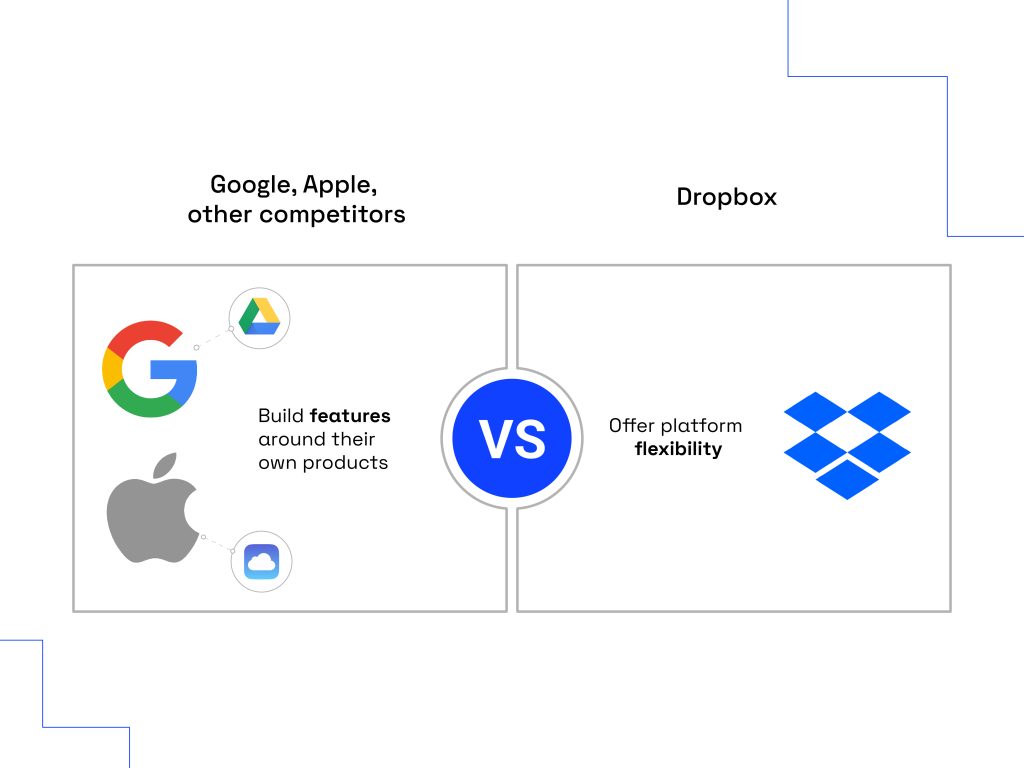
At the time, several companies offered cloud storage solutions. Box, Google Drive, OneDrive, and iCloud were already in the market. However, each of these competitors had a specific focus:
- Box caters to corporate and enterprise clients.
- iCloud primarily backs up iPhone photos.
- Google Drive quickly gained traction but was more integrated with Google’s ecosystem.
- OneDrive was tied to Microsoft’s suite of products.
- Dropbox stood out by offering cross-platform flexibility. It worked seamlessly across all devices and operating systems, making it the go-to choice for freelancers, businesses, and teams who needed hassle-free file access
Lessons and Best Practices from Dropbox’s Success
Learn Early, Learn Often
Building a company isn’t just about market opportunity – it’s about personal growth. For Drew Houston, moving from coder to CEO meant embracing discomfort, making quick decisions, and staying grounded.
Know Your Audience & How Your Product Fits Their Life
Dropbox didn’t chase trends or external pressures. Instead, it focused on what users truly needed – seamless file storage with strong privacy and security. This user-first mindset built a loyal customer base and a strong foundation for growth.
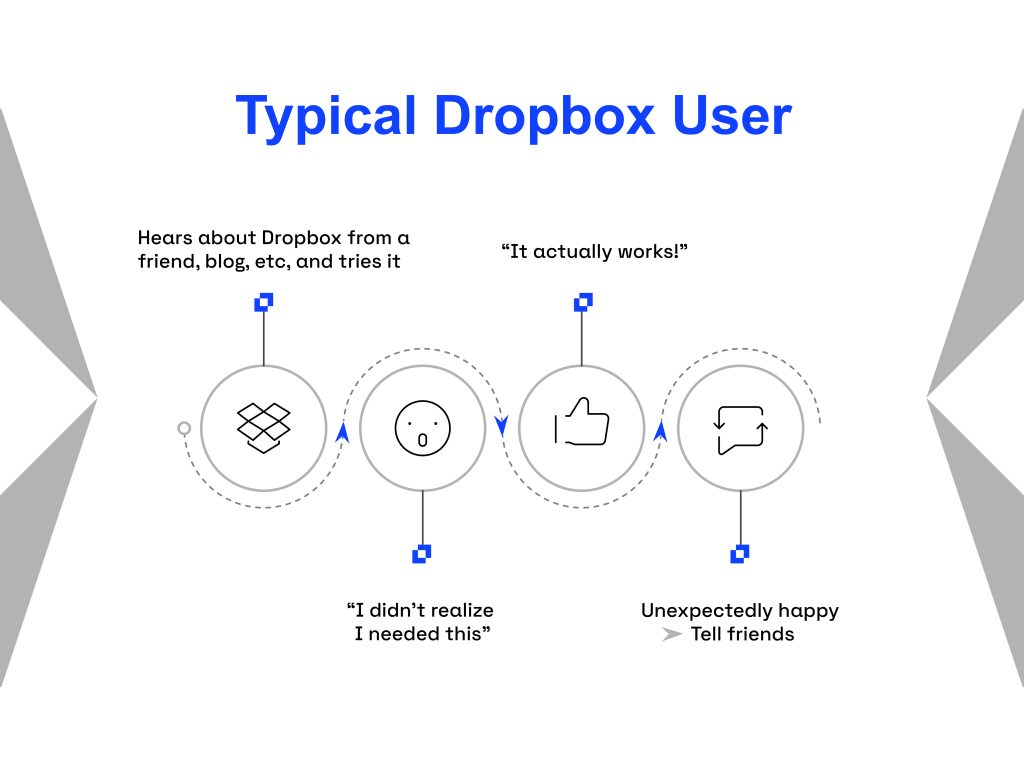
“Dropbox really resonated people with people, and they’re sort of unexpectedly happy that here’s this problem they didn’t know they had and now it’s solved, and then they are willing to tell all their friends”, said Drew.
Start Small, Test Fast
- Minimum Viable Product (MVP): Instead of building for years, Dropbox created a simple 3-minute demo video to showcase its product. The immediate feedback shaped its direction.
- Landing Page: A basic page to capture emails and gauge interest before full development.
- Early Testing: Even if it’s not code, put something in users’ hands and get real feedback.
Make It Easy for Users to Share
- Referral Program: Dropbox’s two-sided incentive (giving both referrer and new user free storage) boosted signups by 60%.
- Optimize Growth: Use surveys, A/B testing, and tweaks to the signup process to maximize conversions.
“Keep the Main Thing the Main Thing”
- Prioritized simplicity: Surrounded by giants like Apple, Google, and Microsoft, Dropbox didn’t try to compete on features – it stayed laser-focused on its core value: a simple, cross-platform tool that just works.
- Hired the best: The team worked relentlessly, bringing in top talent to build a product that users loved.
Go Where Your Audience Is & Speak Their Language
Dropbox’s marketing was clever. Instead of using generic promotional materials, they spoke directly to their audience. The demo video, filled with internet culture references, was a hit because it resonated with tech-savvy early adopters. This strategy amplified their reach and encouraged viral sharing.
By staying true to these strategies, Dropbox carved out its own space in the tech world – proving that a clear vision and disciplined execution can beat even the biggest competitors.
Inspired by Dropbox’s Innovative MVP Approach?
Drew Houston’s video demo wasn’t just luck – it was a strategic MVP.
As a dedicated product acceleration partner, our team at Enosta can guide you through every step of the MVP process, from concept to launch. We’ll help you transform your idea into a tangible product, capturing valuable user feedback and accelerating your time to market.
Contact us today to build an MVP that your users will love!