
What Is AI Transformation? What Changes Beyond AI Tools
September 21, 2026 See more
Ecommerce website development delivers custom digital storefronts that turn casual visitors into loyal buyers. Our team at Enosta helps growing brands navigate platform selection, budget planning, and technical execution through expert website development services. This comprehensive guide details every essential phase, platform choice, and cost factor required to build a scalable online business.
Investing in professional ecommerce website development is essential for standing out in today’s crowded online marketplace. The global e-commerce landscape is rapidly expanding, with sales projected to surpass $6.5 trillion by 2026, representing over 20% of all retail sales. Mobile commerce alone accounts for nearly 60% of these purchases. However, achieving success requires more than just an online presence; it demands a site optimized for conversions.
A mere one-second delay in page load time can decrease conversions by 7%. Furthermore, 40% of visitors abandon websites that take longer than three seconds to load. Companies with clear digital key performance indicators are also 2.5 times more likely to meet their revenue goals. This underscores the critical impact of a well-built site.
Professional development ensures a seamless user experience (UX) and intuitive navigation. It also implements robust security measures, building customer trust and protecting sensitive data. Optimizing for search engines (SEO) drives organic traffic, while integrating essential functionalities like shopping cart software, secure payment gateways, and inventory management systems creates a smooth customer journey.

Selecting the right development path is crucial for your online store’s success. Your choice impacts scalability, customization, and long-term costs. We explore three primary approaches: custom builds, SaaS platforms, and headless architectures.
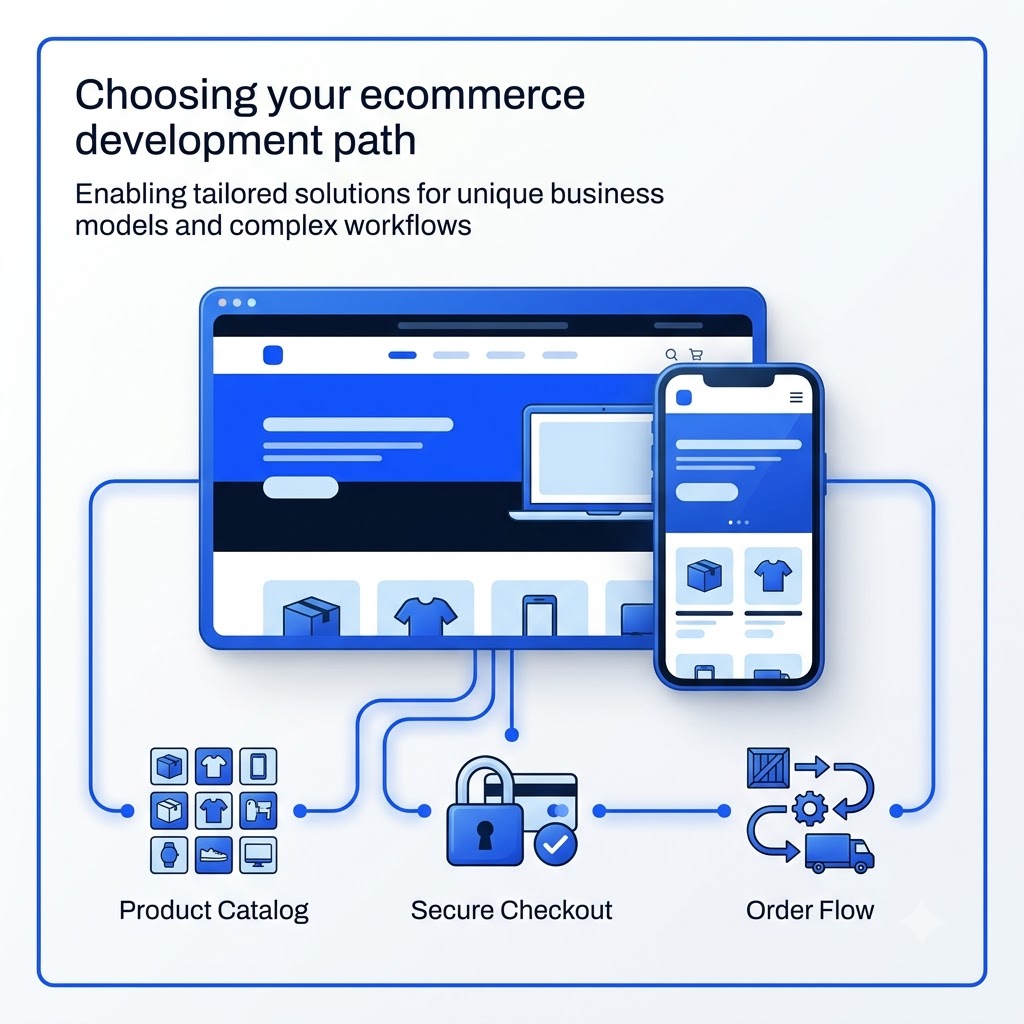
Custom ecommerce website development means building a platform from the ground up. This approach is ideal for businesses with highly unique operational models or complex, proprietary workflows. It offers complete control and unlimited customization. However, it demands significant investment in both time and resources. You’ll need a dedicated IT team or a skilled development partner to manage the entire lifecycle.
Pros:
Cons:
Consider custom development when your business model is exceptionally distinct. It’s also suitable for enterprises aiming for a unique competitive advantage through a highly specialized digital storefront.
SaaS (Software as a Service) ecommerce platforms are subscription-based, hosted solutions. They offer rapid deployment and are excellent for small to mid-sized businesses. Fast-growing brands also benefit from their scalability. Popular options include Shopify, BigCommerce, and Wix eCommerce. These platforms handle much of the technical overhead for you.
Pros:
Cons:
Look for SaaS platforms with open APIs and robust developer toolkits. These features provide greater flexibility for integrations and customizations.
Headless ecommerce development decouples the frontend presentation layer from the backend logic. This architecture allows you to deliver content and commerce experiences across multiple touchpoints. It’s ideal for omnichannel strategies and creating highly personalized customer journeys.
Pros:
Cons:
This approach is best for high-volume enterprises. It suits complex, multi-region operations where a differentiated customer experience is a key priority.
| Approach | Advantages | Disadvantages | Best Use Case |
|---|---|---|---|
| SaaS | Fast launch, low maintenance, predictable monthly cost | Limits on checkout, data model, custom logic | Standard catalog, fast launch, small team |
| Open-source / self-hosted | Full control over data, workflows, and integrations | Security, scaling, and upgrades become your cost | Complex catalog, capable engineering team |
| Headless | Maximum flexibility, omnichannel reach, high performance | Highest build and operating complexity | Experience as a differentiator, omnichannel |
Building a successful e-commerce website involves a structured process. This ensures all critical aspects are covered, from initial concept to final launch. A well-defined workflow minimizes risks and maximizes the chances of creating a high-converting online store.
The first phase is crucial for laying a solid foundation. It involves clearly defining your business objectives and understanding your ideal customer. This includes analyzing market trends and what competitors are doing. You’ll also outline essential functionalities and any necessary system integrations. Finally, establishing a realistic budget and timeline guides the entire project. Our approach to product ideation and strategy helps clarify these initial steps, ensuring your vision aligns with market realities.
Choosing the right e-commerce platform is a pivotal decision. You must evaluate options based on scalability, your budget, and technical requirements. Consider how much customization you need. For instance, the best ecommerce platform for small business needs might differ significantly from enterprise-level demands. Platforms like Shopify offer ease of use, while Magento provides extensive customization for larger operations. Headless commerce solutions also present a flexible alternative for complex needs.
This stage focuses on creating an intuitive and engaging user experience. We start by developing wireframes and mockups that map out user journeys. Prioritizing mobile responsive design ensures your site functions flawlessly on all devices. Intuitive navigation and a visually appealing digital catalog management system are key. The design must also encourage conversions, featuring clear calls-to-action and a streamlined checkout process.

Development involves two core areas. Frontend development builds the customer-facing interface using technologies like HTML, CSS, and JavaScript. This is what your users see and interact with. Backend development focuses on the server-side logic, database management, and API integrations. This powers the site’s functionality, security, and data handling. Leveraging modern architectures like MACH (Microservices, API-first, Cloud-native, Headless) can enhance scalability and flexibility.
Connecting your e-commerce platform with other essential systems is vital for seamless operation. This includes integrating secure payment gateways like Stripe or PayPal for smooth transactions. Shipping providers and fulfillment services are crucial for logistics. Customer Relationship Management (CRM) systems help manage customer interactions. Enterprise Resource Planning (ERP) systems streamline business processes. Marketing automation tools can enhance customer engagement. Our web development services focus on building robust and secure integrations.
Once the core platform is built, populating it with products is next. This involves adding products with compelling descriptions and high-quality images. Implementing effective search and filtering options helps customers find what they need quickly. Accurate inventory management is also critical to prevent overselling and ensure customer satisfaction.
Rigorous Quality Assurance (QA) testing is non-negotiable. We thoroughly test all functionalities across various devices and browsers. This includes validating the entire checkout flow and payment processing. Load speed tests ensure quick performance, while security audits protect sensitive data. We also check for broken links, form errors, and display inconsistencies. Automated tax calculations and promotional code applications are also verified.
The final step is migrating the website to the live production server. Final checks are conducted before the official launch. Performance is then closely monitored post-launch to address any immediate issues. A typical e-commerce platform project timeline can range from 12-20 weeks, depending on complexity and scope.
A successful ecommerce website requires a blend of core functionalities, excellent customer experience, robust marketing tools, and strong security. These elements work together to drive sales and build customer loyalty.
Your online store must handle the entire sales cycle smoothly. This starts with an intuitive product catalog. Detailed product pages should showcase items effectively with clear descriptions and high-quality images. A user-friendly shopping cart and a streamlined checkout process are crucial. They minimize friction and reduce cart abandonment. Offering multiple secure payment gateway options caters to diverse customer preferences. Real-time shipping rate calculation and order tracking provide transparency. An integrated order management system helps track sales and fulfillment efficiently.
Exceptional customer experience is key to repeat business. Ensure your site has a mobile responsive design for seamless viewing on all devices. Fast loading speeds are also vital; users expect pages to load instantly. Allow customers to create and manage user accounts for easier repeat purchases. Customer reviews and ratings build trust and provide social proof. Wishlist functionality lets shoppers save items for later. Personalized product recommendations can increase average order value.
To attract and retain customers, your site needs effective marketing and SEO capabilities. Built-in SEO tools, such as meta tag editors and clean URLs, improve search engine visibility. Integration with email marketing platforms allows for targeted campaigns. Promotional code and discount capabilities encourage purchases. Social media integration and sharing options extend your reach.
Protecting customer data is paramount. A site must have an SSL certificate and use HTTPS for secure data transmission. PCI compliance is essential for processing payments securely. Data encryption and secure storage protect sensitive customer information. Fraud detection and prevention measures safeguard your business. Compliance with regulations like GDPR ensures legal adherence and builds trust.
Behind the scenes, operational efficiency drives success. A robust inventory management system prevents stockouts and overselling. Integration with CRM and ERP systems streamlines business processes. Comprehensive analytics and reporting tools offer insights into performance. This data helps in making informed decisions for growth.

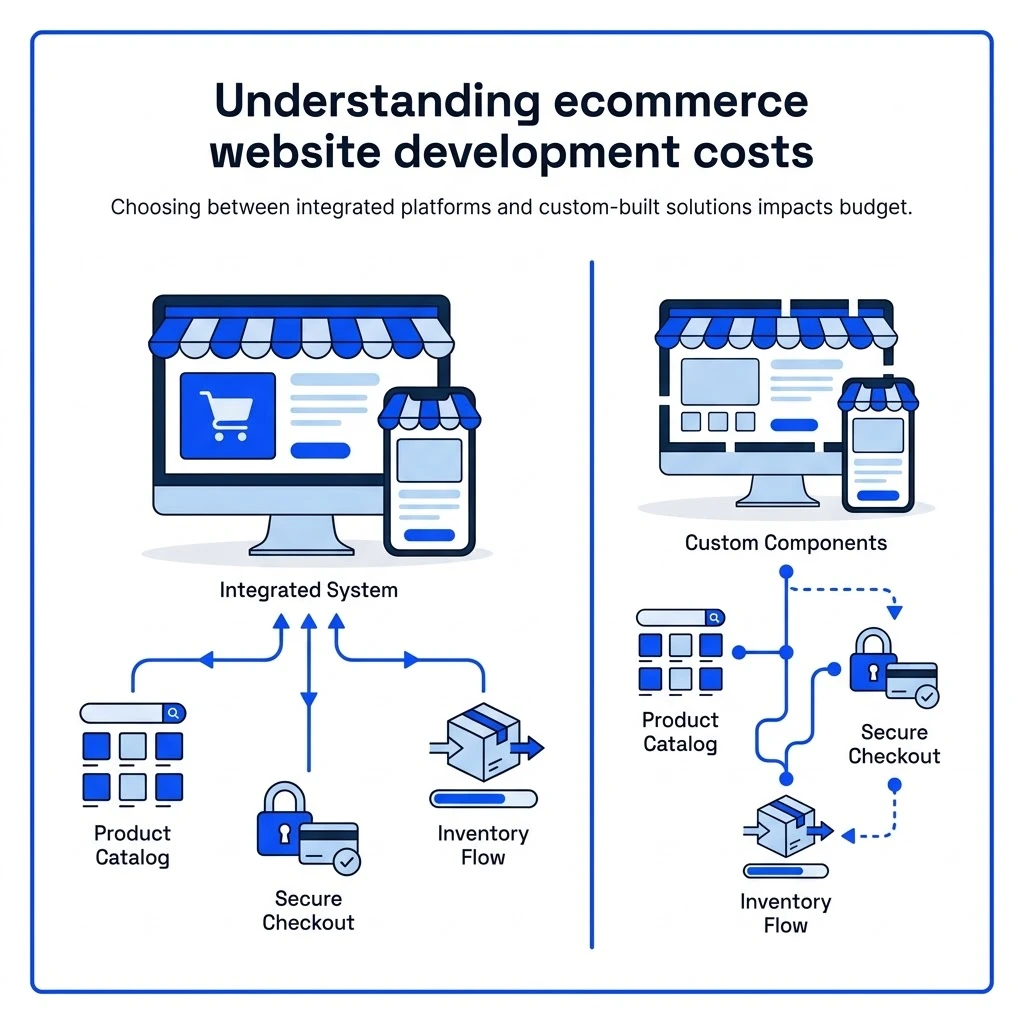
The cost of building an e-commerce website varies significantly. It depends on your chosen platform, design complexity, required features, and the development team you hire. Understanding these factors helps in accurate budgeting.
The platform you select is a primary cost driver. SaaS solutions like Shopify involve monthly subscription fees, which can range from $30 to over $300 per month for standard plans. Enterprise tiers cost more. Open-source platforms like WooCommerce are free to use but require hosting fees, typically $30 to $150 monthly. Custom builds offer maximum flexibility but come with the highest development costs.
Design complexity also impacts the budget. Using a pre-built theme is more affordable than hiring a designer for a custom UI/UX. The number and complexity of custom features and integrations, such as unique payment gateways or ERP connections, will increase development time and expense.
The choice of development team also plays a role. Agencies often have higher hourly rates than freelance developers. In-house teams incur salary and overhead costs. Don’t forget content creation, including product photography and copywriting, and the cost of third-party integrations like plugins or specialized apps.
For a basic e-commerce website with standard features on a SaaS platform, expect initial setup costs to be minimal, with ongoing monthly fees. Open-source solutions might have low upfront costs for the software itself, but development and hosting expenses can add up. A custom-built e-commerce site can range from $10,000 for a relatively simple store to well over $100,000 for complex enterprise-level solutions.
Beyond the initial development, several recurring expenses are crucial for a successful online store. Platform subscription fees are a constant for SaaS users. Hosting and maintenance are necessary for open-source and custom builds. Many e-commerce sites also rely on paid apps and plugins for added functionality, incurring monthly or annual subscription costs.
Regular security updates, performance monitoring, and marketing efforts are also ongoing investments. Strategies to combat shopping cart abandonment, such as email reminders or retargeting ads, can also add to the operational budget.
Selecting the right agency or freelancer is critical for a successful ecommerce website development project. This partner brings specialized skills and experience to navigate the complexities of building a high-performing online store. Their expertise can accelerate development and mitigate risks, allowing you to focus on your core business operations.

Engaging external expertise offers distinct advantages. You gain access to specialized skills in areas like custom ecommerce website development and headless ecommerce development services. This can significantly shorten development timelines compared to building an in-house team. Furthermore, experienced developers can help avoid common pitfalls, reducing the risk of project delays or outright failure. This allows your internal team to concentrate on strategic growth and customer engagement.
When assessing potential partners, a thorough evaluation is essential.
In our experience, a partner who deeply understands your business goals and can translate them into technical solutions is crucial for success. Their ability to align with your vision ensures the final product effectively serves your strategic objectives.
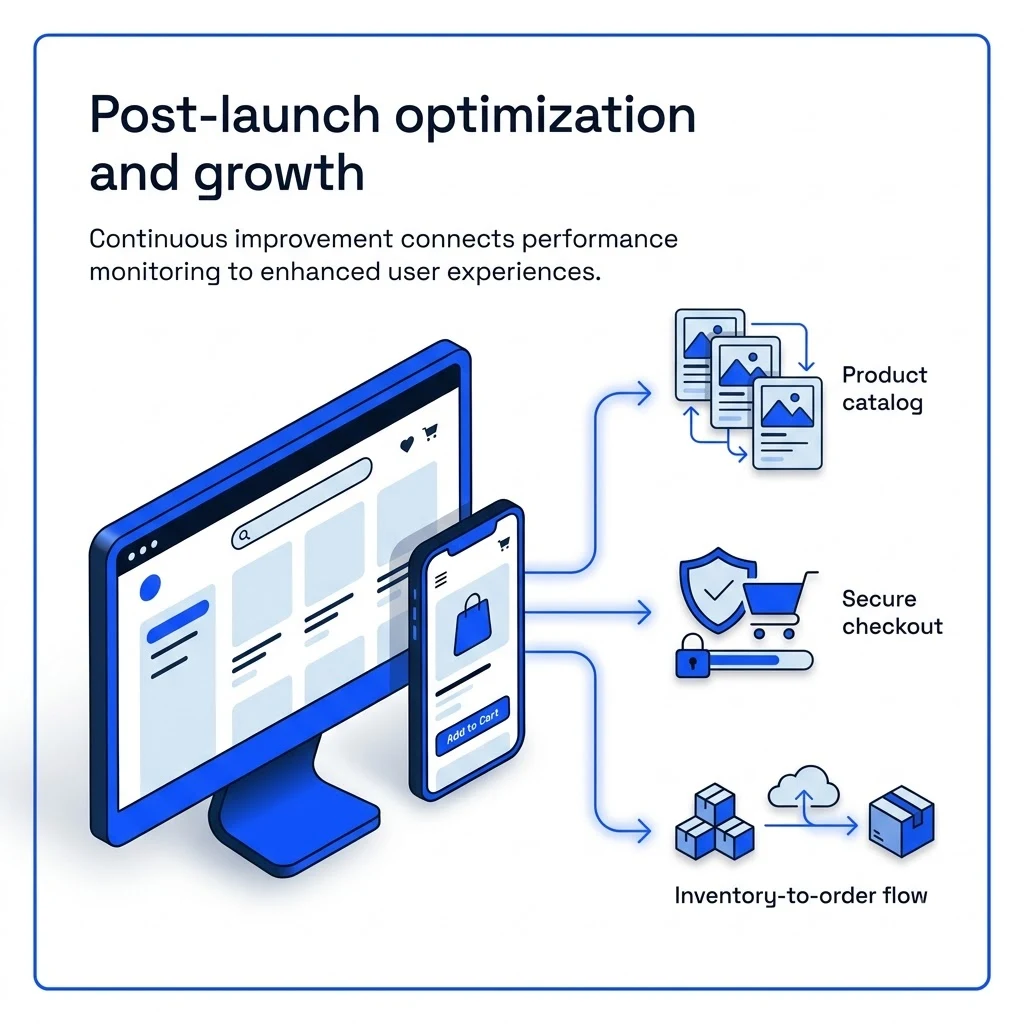
Launching your e-commerce website is just the beginning. Continuous improvement and strategic growth initiatives are crucial for long-term success. This involves actively monitoring performance, optimizing for conversions, and maintaining the site’s health.
After launch, closely monitor your website’s performance using analytics tools like Google Analytics. Track key metrics such as conversion rates, bounce rates, average order value, and customer acquisition cost. Analyzing user behavior helps identify areas where visitors might struggle. This data-driven approach ensures your site evolves to meet customer needs and business goals. Our team at Enosta often sees clients benefit from regular performance reviews to pinpoint opportunities for enhancement.
Conversion Rate Optimization (CRO) focuses on maximizing the percentage of visitors who complete a desired action, like making a purchase. This involves A/B testing various elements such as headlines, calls-to-action (CTAs), and page layouts. Optimizing product pages and the checkout flow based on collected data is also vital. Implementing strategies to reduce shopping cart abandonment can significantly boost revenue. For example, simplifying the checkout process or offering guest checkout options can make a difference.
Sustained organic visibility requires ongoing SEO strategies. This includes content creation, keyword optimization, and building backlinks. Targeted advertising campaigns on platforms like Google Ads or social media can drive immediate traffic. Engaging customers through email marketing and social media builds loyalty and encourages repeat business. Consistent marketing efforts are key to attracting new customers and retaining existing ones.
Regular maintenance ensures your e-commerce site remains secure, functional, and up-to-date. This includes applying platform software updates, security patches, and plugin upgrades promptly. Performing routine backups and performance checks prevents data loss and downtime. Adapting to evolving customer expectations and market trends is also essential for staying competitive. This proactive approach safeguards your investment and user experience.
Timelines for e-commerce website development vary significantly based on project complexity. A standard e-commerce platform with essential integrations typically requires 12 to 20 weeks for completion. This timeframe allows for thorough planning, design, development, and testing phases.
For those looking to avoid coding, Software as a Service (SaaS) platforms like Shopify or BigCommerce offer user-friendly interfaces. These platforms enable website creation with minimal or no technical expertise required.
Key risks in e-commerce development include scope creep, budget overruns, and choosing the wrong platform. Security vulnerabilities and integration challenges also pose significant threats to project success.
Ensuring e-commerce site security involves implementing SSL certificates and adhering to PCI compliance standards. Strong passwords, regular security audits, and effective fraud detection measures are also crucial.
Open-source platforms offer maximum control and customization but demand self-management of hosting and security. SaaS platforms, conversely, are hosted and managed, offering faster deployment but with less flexibility.
Navigate complex development choices with seasoned advice
Talk to ExpertsLaunching a successful online store is a strategic endeavor. It blends technical expertise with a deep understanding of customer behavior. By carefully selecting your development path, you can build a resilient online retail platform. Prioritizing essential features and focusing on continuous optimization are key. This approach drives sales and supports long-term growth. Whether you opt for a custom build, a SaaS solution, or a headless architecture, partnering with experienced ecommerce development agency professionals can significantly de-risk the process. This partnership also accelerates your path to market.
The shift towards composable DXP architectures, with Gartner projecting 70% of enterprises adopting them by 2026, highlights the need for flexible, scalable solutions. Choosing the right platform is paramount. SaaS options like Shopify offer speed to market. Open-source platforms like WooCommerce provide customization. Headless CMS solutions offer ultimate flexibility for complex integrations. Each has trade-offs in cost, control, and technical requirements.
Post-launch, continuous improvement is vital. Monitor key metrics like conversion rates and site speed. Implement A/B testing for user experience enhancements. Stay updated on security protocols and compliance standards. This proactive approach ensures your digital storefront remains competitive and secure.


Error: Contact form not found.
