Agentic process automation is not software running loose inside your business. It is a designed loop where an AI agent interprets unstructured input, retrieves context, uses permitted tools, and acts only within defined boundaries. Deterministic software still owns eligibility checks, calculations, and the actual write. Humans still own commitments, exceptions, and go/no-go thresholds. This guide helps operations and automation leads decide whether one business process needs that loop. It also shows how to define the agent’s bounded role and plan a measurable pilot using one hypothetical order-change example.
What agentic process automation means in operations
Agentic process automation is bounded action inside a process, not chatbot output. An agent loop interprets input, retrieves approved context, selects permitted tools, and proposes or performs a bounded next step. It is a design choice about where judgment helps and where fixed rules must stay in control.
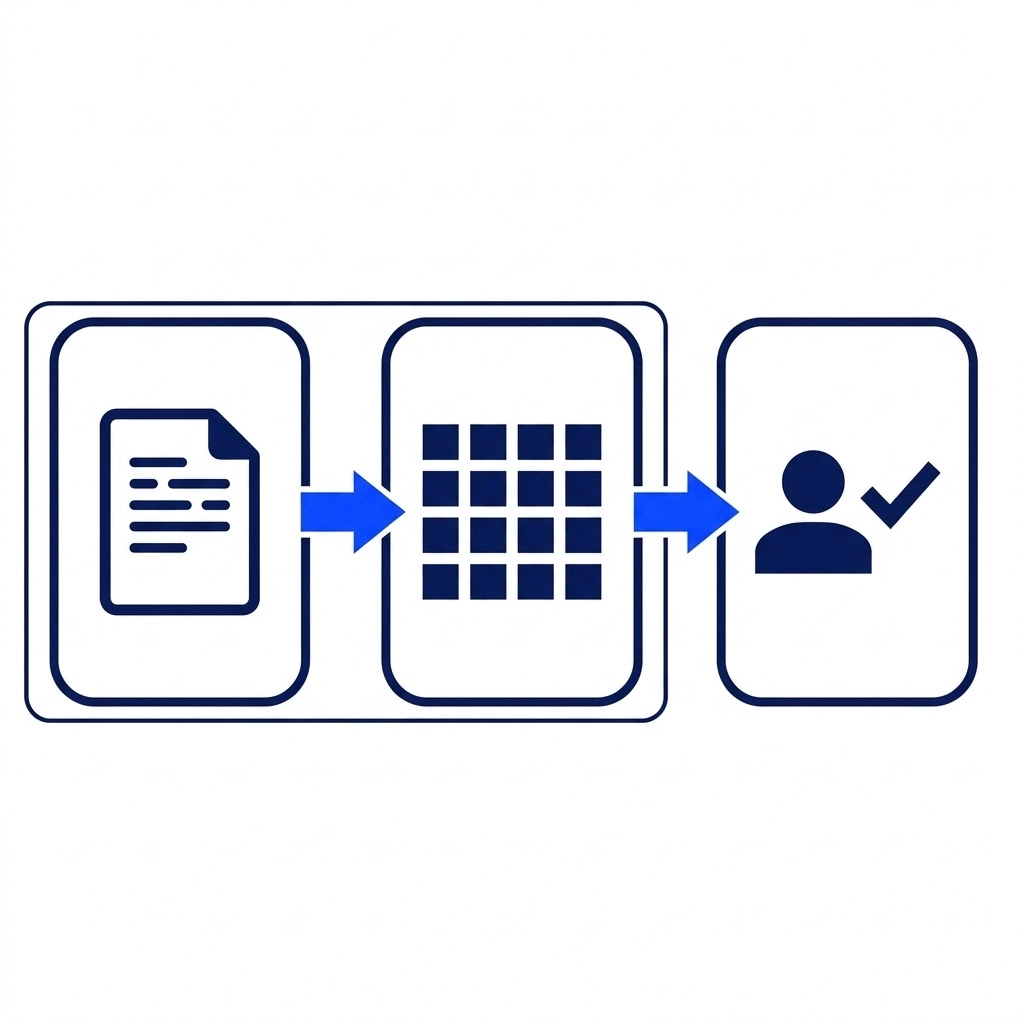
Three terms matter before any comparison.
- Agent: A software component that interprets context and selects a next step within permitted boundaries.
- Deterministic execution: Software that follows fixed rules and produces the same result for the same input.
- Bounded authority: The explicit limit on what an agent may read, recommend, draft, or write.
Three ownership layers
The agent interprets variable input. It reads a messy email, a scanned form, or a free-text request and works out what the sender actually wants. This is where large language models earn their place, because the input does not arrive in a fixed format.
Retrieval and tool use sit next to that interpretation. The agent fetches the order record, the current policy, and the customer history through approved tools. It does not invent those facts. It also does not treat a retrieved document as an instruction to act.
Deterministic software enforces exact commitments. It checks identity, order age, product eligibility, and value limits against fixed rules. The same input always produces the same verdict. That consistency is what makes the check auditable and testable.
People remain accountable for irreversible decisions. A human approves a refund, an inventory commitment, or an outbound message that cannot be recalled. The agent may prepare the evidence, but it does not own the commitment.
This split matters because process-level coordination is the hard part. According to IBM’s explanation of agentic automation, the value comes from coordinating steps across systems, not from generating text. A chatbot that answers questions changes nothing in the business system. An agent that retrieves an order, applies a check, and requests approval changes the state of a real process.
The table below maps each ownership layer to the kind of work it handles. Use it to place a task before designing anything.
| Layer | Owns | Example work | Fails if |
|---|---|---|---|
| Agent | Interpretation and next-step selection | Reading a free-text order-change email | Input is fully structured |
| Deterministic software | Rules, calculations, state changes | Eligibility checks, value limits, the write | Rules are incomplete |
| Human | Commitments and exceptions | Approving a refund or outbound message | Reviewer capacity runs out |
The practical test is simple. If removing the model would leave the process unchanged, you have automation with AI, not agentic process automation. If removing the model breaks the process because nothing else can interpret the input, you have a genuine agent loop. That distinction drives every decision that follows.
How an agent differs from RPA, API workflows, and rules
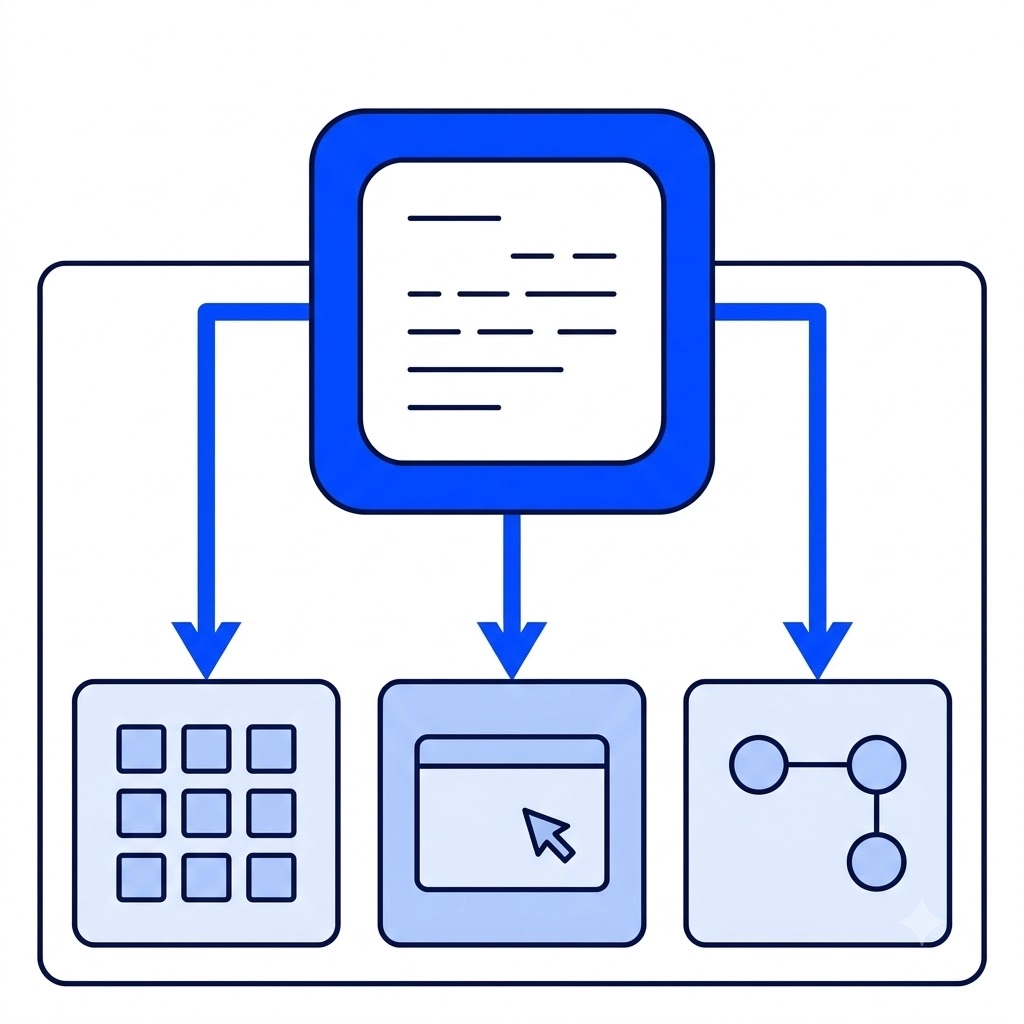
The table below answers one question: what chooses the next step in each approach?
| Approach | What chooses the next step | Best fit | Boundary |
|---|---|---|---|
| Deterministic workflow | Predefined sequence and rules | Stable, known processes | Coordinates systems and approvals |
| RPA | Predefined UI actions and selectors | Legacy systems without APIs | Brittle when the UI changes |
| API orchestration | Fixed integration calls | Known systems with stable contracts | Guaranteed execution of a known call |
| Agentic process automation | Agent interprets context and selects a permitted tool | Variable input needing judgment | Acts only within bounded authority |
RPA and API orchestration execute predefined steps reliably. An agent adds adaptive interpretation where input or context varies. The agent is the reasoning layer, while RPA remains the execution layer.
A workflow containing one LLM call is not an agent just because a model answered a prompt. The model may classify a message or draft a reply inside a fixed branch. Nothing in that loop chooses its own next step or touches a business system.
Why the layers coexist instead of replacing each other
These approaches solve different problems, so they usually sit together rather than compete. The agent decides what to check and which permitted tool to invoke. The execution layer then performs the deterministic step exactly as specified.
UiPath’s documentation on agentic automation describes agents, robots, and people working as distinct roles in one process. The robot does not reason. The agent does not click through a legacy screen. Each role handles the part it is built for.
A hybrid pattern makes this concrete. An agent reads an incoming request and decides which records matter. It then calls an existing RPA bot or a stable API to perform a deterministic step, such as updating a field or posting a transaction.
The agent does not replace the execution layer. It decides which permitted execution layer to invoke, and it stops at the boundary set for it.
This hybrid framing matters for planning. RPA is not obsolete, and the agent layer does not absorb the rule engine. A rule engine still enforces eligibility and policy. The agent only interprets what the rules cannot pre-classify.
What each layer does well, and where it breaks
The strengths are complementary, and so are the failure modes.
- Deterministic workflow: Reliable for stable input and complete rules. It struggles when the input format changes or a step needs judgment.
- RPA: Reaches legacy systems that expose no API. It breaks when the user interface or form layout changes.
- API orchestration: Fast and predictable when contracts are stable. It cannot interpret a request that arrives outside the expected schema.
- Agentic process automation: Handles variable, unstructured input and selects a next step. It needs bounded authority, or its flexibility becomes a liability.
Anthropic’s engineering guidance on building effective agents makes a related point. Simpler approaches are often sufficient. A fixed workflow or a single model call can outperform an agent when the task is well defined. Adding agency is a deliberate design choice, not an automatic upgrade.
That is why the comparison is layered, not a ranking. The right question is not which approach wins. It is which layer should own each decision inside the process you are examining.
Does adding an LLM make a workflow an agent?
No. A single model call inside a fixed workflow is automation with AI, not an agent.
This is the most common misreading we see when teams first map their automation estate. A process calls a large language model to classify an email, tag a ticket, or draft a reply. The model produces useful text. The workflow then follows a branch a designer wrote in advance. That is a fixed workflow with a model step. Nothing in it chooses its own next move.
The three-part loop test
Apply this test to any candidate workflow. It counts as agentic process automation only when all three conditions hold.
- 01Interpretation: The agent reads context and selects the next step from permitted options, rather than following one hardcoded branch.
- 02Tool use: The agent retrieves information or requests an action through approved tools.
- 03Bounded action: Whatever the agent does stays inside a defined authority boundary.
Miss any one of these, and you have something else:
- A classifier with no tools is just a model call.
- A tool-calling script with no choice is a deterministic integration.
- A loop with no boundary is an uncontrolled experiment.
Anthropic’s guidance on building effective agents draws the same line. It separates predefined workflows, where code paths are fixed, from agents that direct their own process. The distinction is architectural. It does not depend on which model you use.
The copilot is not the agent
A copilot answers questions and drafts text. It does not control execution. It may sit beside a person and speed up their work, but it never touches the business system on its own.
Agency requires the designed loop, not the presence of a model. Remove the model and see what happens. If the process still runs unchanged, you have AI-powered automation. If removing the model breaks the process, because nothing else can interpret the input, you have a genuine agent loop.
That single test tells you which later decisions in this guide actually apply to your workflow.
A worked example: one bounded order-change request
This example is hypothetical and reused throughout the article. It shows one B2B order-change request moving through a single bounded path. The point is not the order itself. The point is where the agent stops and where deterministic software or a person takes over.
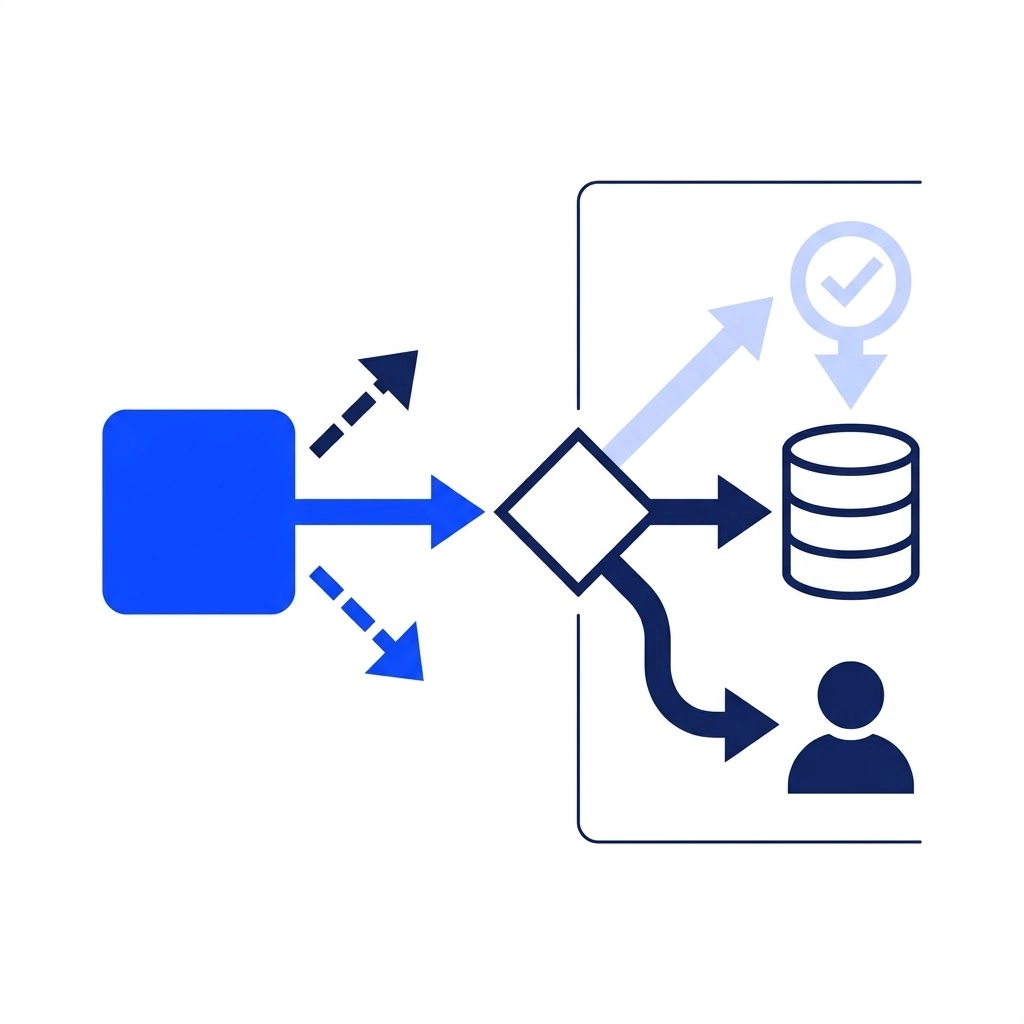
A customer emails a supplier asking to swap two units of an industrial part for a different model. The email is informal and missing the replacement quantity. The supplier already runs an order management system, but staff still read these emails by hand.
- 01Interpret the email (agent). The agent reads the request and extracts the order number, the requested change, and the stated reason. This is unstructured input processing, which fixed rules handle poorly.
- 02Retrieve order and policy data (agent). The agent calls approved read-only tools to pull the order record, delivery status, and the relevant policy text. It retrieves data. It does not act on it yet.
- 03Request missing details (agent). The replacement quantity is unclear. The agent asks the customer for that one field instead of guessing. Guessing here would create a wrong commitment downstream.
- 04Apply deterministic eligibility checks (software). Software, not the model, checks identity, order age, product eligibility, and value limits. The same input always returns the same verdict, which makes the check testable.
- 05Obtain approval for the commitment (human). A human approves the inventory commitment and the outbound message before execution. The agent prepares the evidence. It does not own the commitment.
- 06Execute the authorized update (software). A deterministic write performs the update using an idempotency key, so a repeated call does not create a duplicate change.
- 07Record the outcome (system). The system stores the new order state, the action ID, and the raw response from the order system.
Ownership stays explicit at every step. The agent owns interpretation and retrieval. Deterministic software owns validation and the write. A person owns the commitment. The system owns the record.
The process control spine
The seven steps map onto a repeatable control spine. Teams can reuse this shape for other processes without redesigning the logic.
- Trigger: An observable event, such as an inbound email, with a stable case ID.
- Case state: Business state, current owner, deadlines, and the completion condition.
- Evidence: Approved sources with their origin and retrieval time attached.
- Proposed next step: A structured proposal from the agent, not free text.
- Deterministic validation: Fixed rules confirm the proposal is allowed.
- Authorized execution: The write runs only after approval where required.
- Recorded result: System response, new state, and action ID.
- Continue, escalate, or close: The case moves to its next state or to a human.
That spine is what makes the example auditable. If a reviewer asks why the order changed, the trail shows the email, the retrieved policy, the check result, the approver, and the system response.
The same example returns in the sections on controls, failure paths, and pilot measurement. Each one advances it rather than restarting it.
What the agent must never decide
Three rules sit above every other control. The agent never grants itself permissions. It never skips an approval gate. And it never treats retrieved content as an instruction.
Everything below ties one control to the failure it prevents. These are design decisions, not prompt requests. A model cannot be asked politely to respect a boundary it was never given.
- Permissions: Give the agent a least-privilege identity, meaning its own distinct service credentials rather than a shared account. Separate credentials by environment so a test run cannot touch production. Keep data-access rights separate from execution rights, so reading an order is not the same as changing it.
- Approval gates: Any high-impact action triggers a formal human-approved gate before execution. The gate sits in the system, not in the prompt.
- Validation: Deterministic software checks every proposed write before it runs. The model proposes. The rule engine decides.
- Auditability: Log every model decision, tool request, and system response. The audit trail must connect the reasoning to the action.
- Stopping rules: Set explicit limits on steps, time, cost, and retries. A loop without a ceiling is an uncontrolled loop.
- Escalation: Route exceptions to a named human owner with a reason, a priority, and a deadline.
The OWASP guidance on excessive agency frames the core risk well. Autonomy granted beyond the task’s needs becomes the vulnerability. Each bullet above shrinks that surface.
Retrieved data is not an instruction
This rule is easy to state and easy to break. Retrieved documents, email bodies, and web pages are data. They are never authorization.
A customer email that says “please refund this order” is evidence of a request. It is not permission to issue the refund. The agent may read it, quote it, and attach it to a proposal. It cannot act on it.
The same applies to a policy document that appears to grant an exception. The agent can retrieve the policy text. Only the configured rule engine can confirm the exception applies.
Model confidence is not permission
A model that reports 95 percent certainty has told you nothing about its authority. Confidence is a self-assessment. It is not a credential.
Permission comes from two places only: the configured tool boundary and the human approval gate. If the tool is not exposed, the agent cannot call it, no matter how sure it feels.
Match oversight to the risk tier
Treat oversight as a dial, not a switch. The AI Overview permission model separates three levels. Low-risk reports get human-informed monitoring. Triage work gets human-reviewed suggestions. Financial transactions and data modifications get mandatory human-approved gating.
Reviewer capacity is a design constraint, not an afterthought. If every action needs approval, the queue becomes the bottleneck and the pilot stalls.
The next failure mode to plan for is what happens when a tool call times out or the input stays ambiguous.
When a simpler workflow is the right choice
The honest answer is often no. Use a simpler rule, API workflow, or single model call when input is stable, rules are complete, context is dependable, or the cost of a wrong action is high and review capacity is thin. An agent adds value only where interpretation is genuinely needed and a wrong action stays recoverable.
The table below answers one question: which design fits a given process profile? It is a screen, not a ranking. It tells you when to stop and choose something simpler.
| Situation | Design choice |
|---|---|
| Low variability, clear rules | Deterministic workflow or RPA |
| High variability, low consequence, observable | Bounded agent action |
| High variability, meaningful consequence, good evidence | Agent prepares; person approves |
| High consequence, weak evidence, poor observability | Keep human-owned or redesign |
The six fit criteria
Score your candidate process against these before writing any prompt. If two or more fail, the simpler workflow wins.
- Input variability: Does the same task arrive in many different forms, or one predictable format?
- Genuine need for adaptive decisions: Is there a real judgment call, or just data movement between systems?
- Accessible and dependable context: Can the agent retrieve the records it needs, reliably and on time?
- Verifiable outputs: Can a deterministic check confirm the result without a human reading it?
- Manageable action consequences: If the agent acts wrongly, is the damage recoverable?
- Responsible exception owner: Is there a named person who owns unresolved cases?
A process that fails the last two criteria is not a pilot candidate. It is a redesign project.
What disqualifies a process
Some conditions rule out an agent regardless of how well the other criteria score.
- Stable input with complete rules. A deterministic workflow or RPA bot handles it reliably and cheaply. Adding a model only adds cost and variance.
- Dependable context that never varies. If the data source is fixed and clean, a fixed API call is enough.
- High consequence with thin review capacity. If every wrong action is costly and no one can review the queue, the approval gate becomes the bottleneck. Keep the process human-owned.
- Undocumented exceptions. If staff resolve exceptions on instinct with no written pattern, standardize the process first. An agent trained on unwritten rules inherits the chaos.
Anthropic’s engineering guidance on building effective agents makes the same point from the other direction. Simpler approaches are often sufficient, and adding agency is a deliberate choice, not an upgrade. A single model call that classifies an email and hands off to a fixed branch is often the correct design.
The readiness checklist
Before you commit to a pilot, confirm every item below. A missing item is a gap to close, not a reason to skip the check.
- The business outcome is observable and has a named owner.
- The process involves repeated, variable judgment, not one-off work.
- Each case has a durable ID, state, evidence, and a completion condition.
- Approved data sources are clear and documented.
- Tool permissions can be limited to what the task needs.
- Hard policies are enforceable outside the model, in code.
- Authority is separated: read, recommend, draft, and write are distinct rights.
- Budgets and escalation states are explicit.
- Reviewers can see the evidence and record their reason.
- Evaluation cases include messy inputs, adversarial inputs, and failure scenarios.
If a candidate clears the six criteria and the readiness checklist, it is worth a bounded pilot. If it fails the disqualifying conditions, use the simpler workflow and revisit later.
Failure paths and safe recovery
Good agent design assumes the agent will be unsure and tool calls will fail. The real question is whether the system recovers safely. It must avoid duplicating work and avoid guessing on the customer’s behalf.
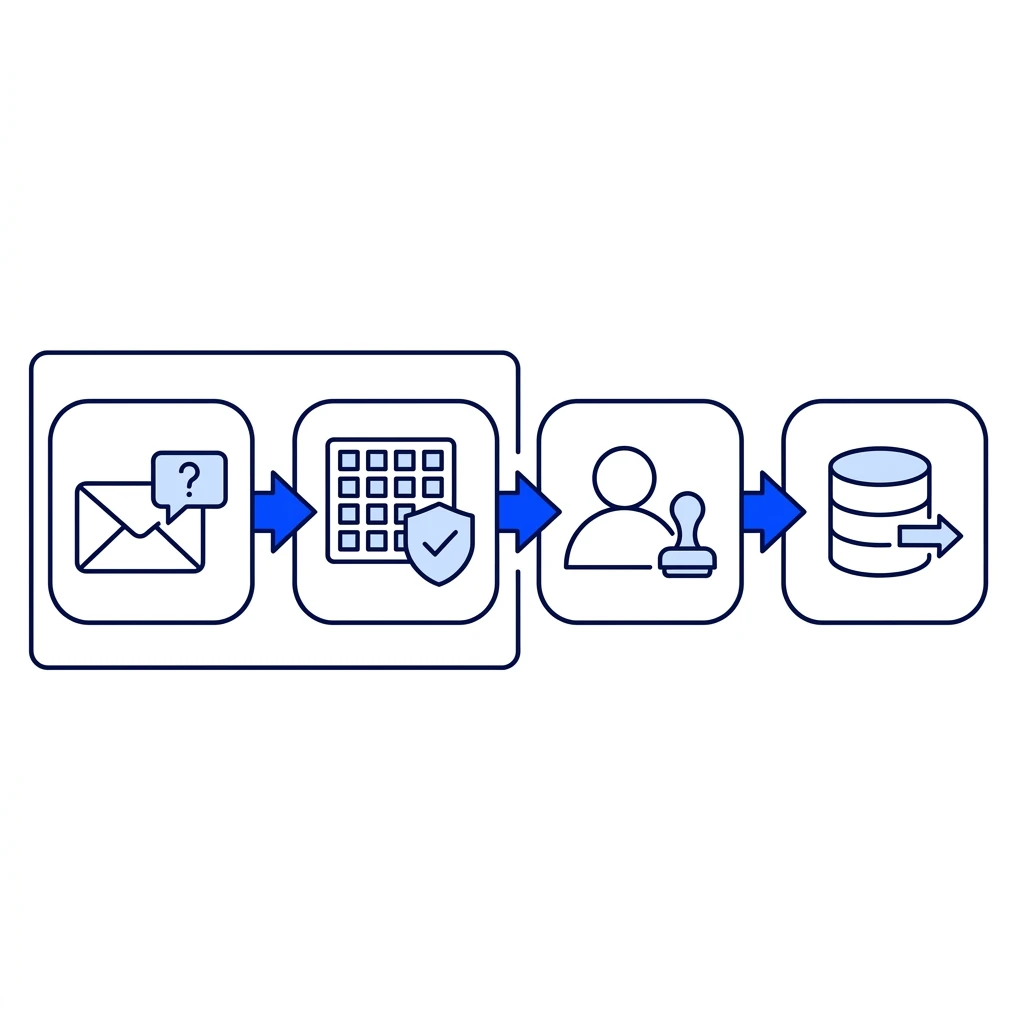
Two failure paths matter most in the order-change example: ambiguous input and a timed-out update. Each needs a defined response before the pilot starts.
Agentic AI projects forecast to be canceled by the end of 2027
Gartner predicts that more than 40% of agentic AI projects will be canceled by the end of 2027, citing rising costs, unclear business value and insufficient risk controls. This is a forecast, not an observed cancellation rate.
When the input is ambiguous
The agent detects a missing or unclear field, such as a replacement quantity or model. It requests the missing detail instead of guessing. A guess would create a wrong commitment downstream. That is exactly what the approval gate exists to prevent.
If the customer does not respond, the case enters a named exception state. That state carries four attributes:
- Owner: The named human accountable for resolving it.
- Reason: Why the agent could not proceed, in plain language.
- Priority: How urgently it needs attention relative to other exceptions.
- Deadline: When it escalates further or closes unresolved.
The loop also needs a progress limit. Without a ceiling, an agent can retry, re-ask, or re-plan indefinitely. Set explicit maximums for steps, elapsed time, cost, and retries. When any limit is hit, the case stops and escalates. This is one of the stopping rules from the controls section, applied here to the failure path.
When an update times out
A tool call times out. The system does not know whether the downstream write succeeded. The request may have reached the order system and completed. It may have failed before execution. The response packet was lost, not the action.
Teams underestimate this failure mode. A timeout is not a confirmed failure. Retrying blindly is the most common way to create duplicate order changes.
The safe sequence:
- 01Query the business system’s actual state using a business key, such as the order number plus the requested change.
- 02If the record exists, sync local state and report success. Do not retry.
- 03If the record definitely does not exist, retry safely with the same idempotency key.
- 04If the state cannot be verified, stop and escalate to a human. Do not guess.
Idempotency keys reduce duplicate writes when the downstream API supports them. Stripe’s API is a common example: a repeated request with the same key returns the same result without repeating the action. Not every internal system offers this. When it does not, state verification before retry is the fallback.
The caveat matters: idempotency keys reduce duplicates. They do not guarantee exactly-once execution. Describe the behavior as at-least-once with verification before retry. That framing sets honest expectations and shapes the monitoring you build.
What to log for both paths
Every failure path needs an audit trail, or the pilot cannot be evaluated. Log the model decision, the tool request, the raw system response, the verification query, and the resolution. The trail connects reasoning to action. That is what a reviewer needs when they ask why an order changed twice, or not at all.
How to run a bounded pilot and measure it
A bounded pilot answers one question: does this agent beat the current process without adding new risk? You prove that with a baseline, a limited authority envelope, and acceptance conditions the process owner sets. Not with a vendor threshold or a polished demo.
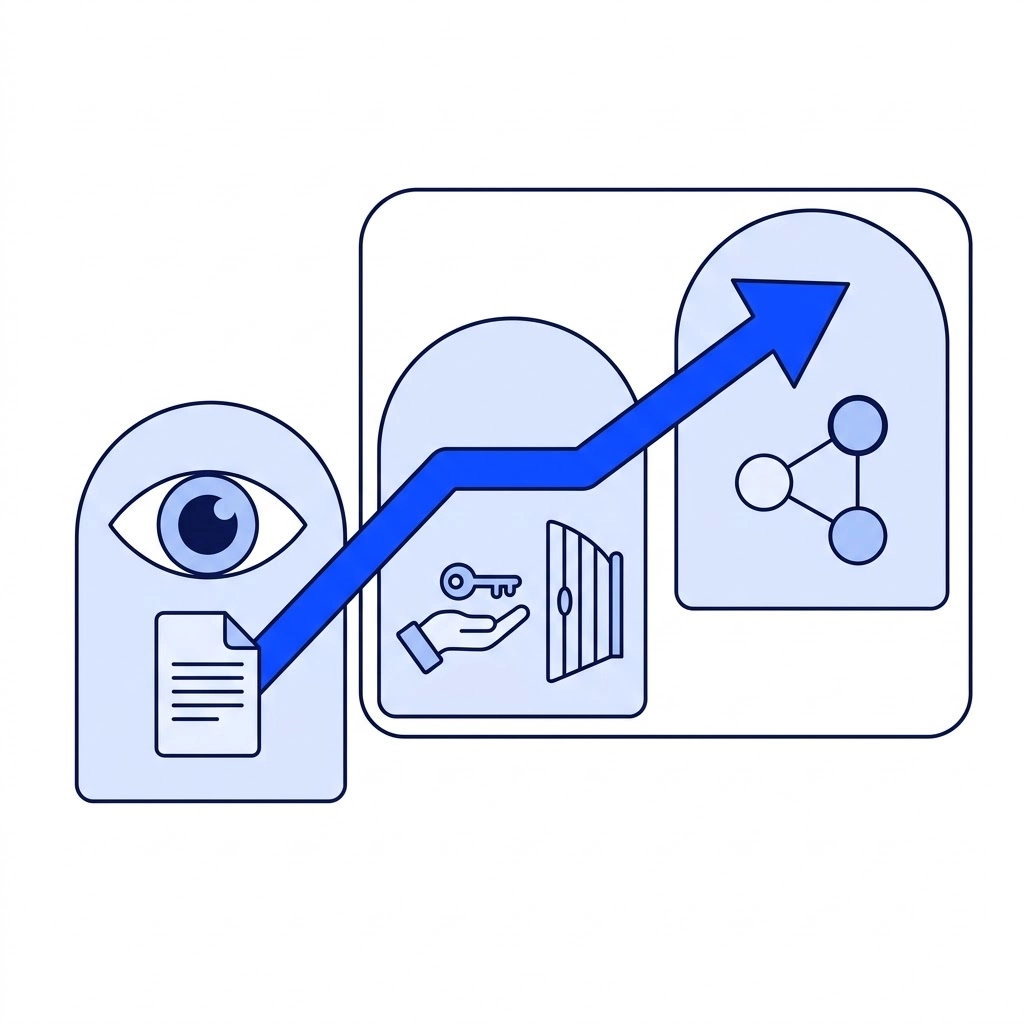
The five steps below follow the same order-change example used earlier. Each step produces an artifact you can review before the next one starts.
- 01Baseline the current process. Record accepted outcomes, incorrect actions, cycle time including review queues, escalation workload, and cost per resolved case. Without this, you cannot claim improvement. You can only claim activity.
- 02Write the case contract and delegation envelope. Define the case ID, objective, current state, owner, evidence and provenance, allowed and blocked actions, budgets, deadlines, and close condition. Reviewers read this document when the agent proposes something.
- 03Begin with shadow operation or read-only mode. The agent observes real cases and proposes actions. It does not write. You compare its proposals against what staff actually did.
- 04Allow bounded writes on representative normal and exception cases. Include messy inputs, adversarial inputs, and failure scenarios, not just clean examples. Keep the delegation envelope unchanged during this phase.
- 05Compare against the baseline and decide go/no-go with the process owner. The owner signs off. Not the vendor. Not a universal percentage pulled from a report.
The delegation envelope in practice
The envelope is the sentence that defines what the agent may do alone. Here is an illustrative version for the order-change example:
For domestic replacement requests under approved product and value limits, assemble order and delivery evidence, recommend an eligible resolution, and draft a response. Require an employee to approve any inventory commitment or outbound message.
Read it carefully. The agent assembles, recommends, and drafts. It does not commit inventory or send messages. Expansion happens by action, not by label. When the evidence supports it, widen one specific permission, not the agent’s general autonomy.
What to measure
Measure correctly completed outcomes, not agent activity. The metrics below map to the five pilot steps and to the failure paths covered earlier.
- Correctly completed cases: Cases resolved to the close condition without reversal.
- Incorrect actions: Writes that had to be undone or corrected.
- End-to-end cycle time: Including review queues, not just agent runtime.
- Manual touch time: Human minutes per case before and after.
- Escalation workload and exception age: How many cases reach a human, and how long they wait.
- Approval change rate: How often reviewers reject or modify the agent’s proposal.
- Rework and reversal rate: Cases that had to be redone.
- Policy or permission violations: Any attempt to act outside the envelope.
- Uncertain-write recoveries: Timed-out writes resolved by state verification.
- Total cost per successfully resolved case: The only cost metric that matters.
That last metric is where most pilots mislead themselves. API price is not total operating cost. Include integration work, inference, monitoring, human review time, and rework. A cheap model with a heavy review queue costs more per resolved case than a stronger model that clears the queue.
What a production outcome looks like
One deployment is not a benchmark, but it shows what a bounded rollout can produce at scale. According to the MarketsandMarkets agentic AI report, Cox Automotive moved 17 agentic solutions into production and cut fleet repair-estimate turnaround from 8 to 48 hours down to 30 minutes. Treat that as one deployment with its own scope and constraints, not a target for your process.
Choosing how to build it
The delivery model follows from the process shape, not from preference. Use native platform capability when the process lives inside one system. Use an orchestration platform for long-running, multi-system work. Choose custom implementation when proprietary rules or specialized interfaces are central. A hybrid of native systems plus a thin custom layer often fits best when the core systems are already solid.
Market context and adoption risk
Agentic process automation is moving from experiment to budget line. The gap between adoption and proven value is still wide. The market and spending are real, and so is the cancellation risk.
The global agentic AI market is estimated at USD 19.33 billion in 2026, projected to reach USD 205.88 billion by 2033. Software takes the largest share of that spend, and customer service is the most common application area. One caveat applies: these figures cover broader agentic AI, not agentic process automation platforms specifically. Treat the number as context for momentum, not as a forecast for your process.
Adoption is not value
The Alice Labs ROI benchmark report found that 88 percent of organizations regularly use AI in at least one function. Yet only 39 percent report EBIT impact from generative AI in 2026. That gap is the whole argument for bounded pilots. Usage is easy to demonstrate. Measured financial impact is not.
Governance shows the same pattern. According to a 2026 agentic AI system review, 74 percent of companies plan to deploy agentic AI systems. Only 21 percent have a mature governance model to oversee them. Planning outpaces control.
Who is actually scaling
Scale is concentrated, not universal. In the same review, 40 percent of respondents at organizations above USD 1 billion in annual revenue report scaling AI agents. That compares with a flat 22 percent among smaller organizations. Larger firms have the integration teams, review capacity, and risk functions that bounded pilots demand.
Vendor bookings tell a similar story. Automation Anywhere reported that AI-powered offerings accounted for 61 percent of software bookings in one quarter. Customers exceeding USD 1 million in annual recurring revenue grew 23 percent. That is a buying signal, not proof of delivered value.
What this means for your decision
Three conclusions follow.
- The approach is past the pure-experiment stage, but it is not yet a safe default.
- Cancellation risk clusters around cost escalation, unclear value, and weak controls. The pilot design in this article addresses each directly.
- Governance maturity, not model choice, separates the organizations that scale from those that stall.
If your process has a measurable baseline and a named owner, the market context supports testing it. If it has neither, the cancellation statistic is the relevant one.
Making the call and next step
You do not need a perfect process. You need one bounded path you can measure and reverse. That is the whole decision.
Nominate one process with variable input and a real judgment call. Confirm it has a named exception owner. Then baseline it before you change anything.
Define the delegation envelope and the acceptance conditions in writing. Name the process owner who signs off go/no-go. Start with read-only or shadow operation, then expand by action, not by label.
A short decision path:
- Nominate one process. Variable input, a genuine judgment call, and a named exception owner.
- Baseline it first. Accepted outcomes, incorrect actions, cycle time, escalation workload, and cost per resolved case.
- Define the envelope. Allowed actions, blocked actions, budgets, deadlines, and close condition.
- Name the approver. The process owner signs off go/no-go, not the vendor.
- Start read-only. Shadow operation, then bounded writes, then one permission at a time.
Do not start with your most complex process. Start with one bounded path where a wrong action is recoverable and the baseline is measurable. If the process fails that test, use a simpler workflow and revisit it later.
That is the practical answer to when to use agentic automation: when the process has variable input, a real judgment call, verifiable output, and a recoverable mistake. Everything else is a candidate for rules, APIs, or a single model call.
If you want a broader view of the capability set behind this work, review the AI service package before you scope the pilot.
Frequently asked questions
Does adding an LLM make a workflow an agent?
No. A model call inside a fixed sequence is automation with AI, not agency. The test is whether the system chooses its own next step from permitted options, uses tools, and stays inside a defined authority boundary. If a human pre-defined every branch, the workflow is still deterministic.
When should we not use an agent?
Skip the agent when input is stable, rules are complete, and context is dependable. Also skip it when a wrong action is hard to reverse and reviewer capacity is thin. In those cases, a rule, an API call, or a single model call will be cheaper and easier to trust.
What happens after a timed-out update?
A timeout means the outcome is unknown, not failed. The system should query the business system using a business key before any retry. If the record exists, sync state and move on. If it cannot be verified, stop and escalate rather than guess.
Who sets the go/no-go threshold?
The process owner sets it, in writing, before the pilot starts. A vendor benchmark or a universal percentage is not a substitute. The owner knows the baseline, the review capacity, and the cost of a wrong action, so the threshold should reflect that specific process.
How do we keep reviewer workload from exploding?
Match oversight to risk tier instead of approving everything. Low-risk proposals can be monitored after the fact, while high-impact actions keep a hard approval gate. Track escalation rate and approval change rate, and treat a rising queue as a design signal, not a staffing problem.
How does the agent tell retrieved information apart from a trusted instruction?
Retrieved content is data, never authorization. An email asking for a refund is evidence of a request, not permission to issue one. Only system-level policy and a named human approval can authorize a high-impact action, and a model’s stated confidence is never an adequate substitute.