Choosing generative AI consulting services starts with defining the help your organization needs: strategy, architecture, implementation, or ongoing operations. This buyer’s guide helps technical and operational leaders compare engagement scopes, assess readiness, examine pricing assumptions, and evaluate potential providers. Use the criteria and questions below to build a shortlist and verify each provider’s capabilities against your requirements. The provider profiles are a starting point for due diligence, not a ranking or a guarantee of delivery outcomes.
What generative AI consulting services deliver
According to a Generative AI Consulting Guide, 95% of enterprise generative AI pilots deliver no measurable P&L impact, and only 5% of custom enterprise AI tools reach production. Engaging an external technical partner helps technical leaders overcome internal artificial intelligence skills shortages, avoid expensive hiring cycles, and accelerate time-to-market while addressing the high pilot failure rate.
The table below outlines the primary consulting work streams, their technical focus, and their tangible enterprise deliverables.
| Consulting Work Stream | Technical Focus | Tangible Enterprise Deliverables |
|---|---|---|
| Strategy & Roadmap | Use case prioritization, feasibility assessment, and total cost of ownership analysis | Enterprise AI roadmap, ROI matrix, and technology stack selection report |
| RAG & Knowledge Systems | Document parsing, vector embeddings, and retrieval-augmented generation pipelines | Secure internal search engines and enterprise knowledge assistants |
| Custom Development & Fine-Tuning | Foundation model selection, parameter tuning, and domain adaptation | Domain-specific LLM weights and specialized application codebases |
| Production Hardening & LLMOps | Latency optimization, model evaluation, and automated cost tracking | Monitoring dashboards, CI/CD pipelines, and guardrail frameworks |
These deliverables adapt directly to enterprise operational requirements. For security-conscious organizations, consultancies configure private cloud deployments and enforce strict data isolation boundaries with foundation model providers. This governance framework ensures data privacy and regulatory compliance. In modern digital operations, an enterprise ai transformation service restructures manual knowledge processes into automated, context-aware systems that scale reliably.
Client preparation and organizational readiness checklist
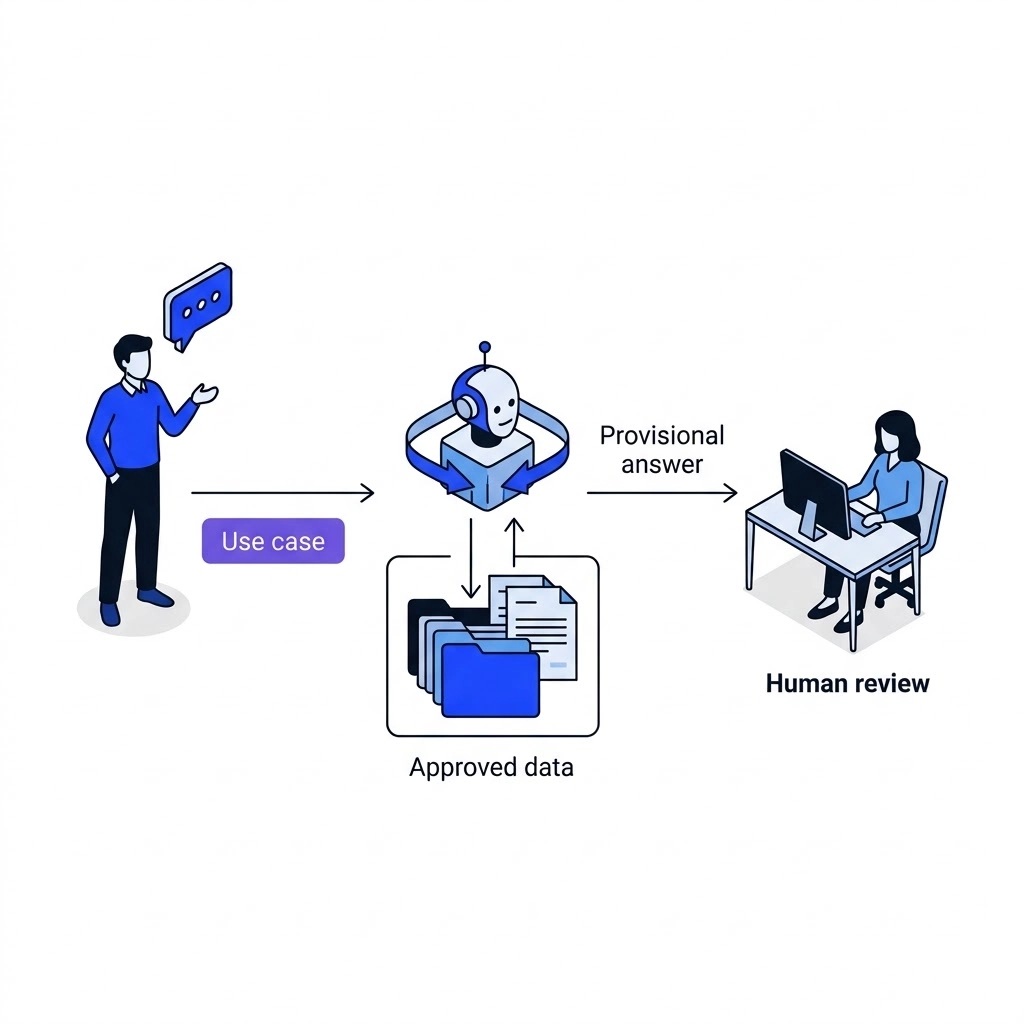
Hiring an external firm before auditing internal data assets and governance boundaries is a primary cause of project delays. Client teams must complete critical baseline preparation across their infrastructure, data hygiene, and organizational governance to ensure predictable project timelines.
According to research from Second Talent, enterprise generative AI spending reached $37 billion, tripling year-over-year allocations and driving intense demand for external architectural advisory. However, data engineering and governance scoping routinely account for 60 to 80 percent of the total project effort.
The checklist below outlines the core technical and operational prerequisites required before engaging an external development team.
| Prerequisite Area | Specific Requirement | Operational Impact |
|---|---|---|
| Clean Internal Data Assets | Audit document freshness, clean unstructured repositories, and map database schemas. | Prevents garbage-in results during custom retrieval pipelines. |
| API Accessibility | Verify REST or GraphQL endpoint availability and secure network gateways. | Enables seamless integration with model orchestration frameworks. |
| Compliance Mandates | Document regulatory frameworks like HIPAA, GDPR, or financial data rules. | Enforces strict zero data retention and private cloud deployments. |
| SME Availability | Allocate domain experts for ground-truth validation and relevance testing. | Accelerates feedback loops during evaluation phases. |
Technical readiness also requires aligning internal infrastructure with strict regulatory standards. In our experience, teams operating under regulated mandates must configure zero data retention agreements and establish private cloud deployments with major providers like AWS, Google Cloud, or Microsoft Azure before processing proprietary records.
Four-stage consulting engagement framework
A structured consulting engagement moves systematically from technical discovery to production operations through disciplined stage gates. This phased model prevents unstructured experimentation and aligns software architecture directly with business value.
According to an Impressico POC development guide, Gartner estimates that nearly 30 percent of generative AI projects will be abandoned after the proof-of-concept phase without structured governance. Following a formal delivery lifecycle helps enterprise teams validate assumptions early and avoid pilot failure.
The following sequential steps define standard consulting delivery across enterprise AI initiatives:
- 01Conduct technical discovery and feasibility assessments.
- 02Architect the system design and strategic roadmap.
- 03Validate capabilities via proof-of-concept prototypes.
- 04Deploy to production and harden LLMOps pipelines.
Stage 1: Technical discovery and feasibility assessment
Consultants audit existing software architecture, data pipelines, and security boundaries. The team evaluates nominated business workflows against technical viability and model capabilities.
- Primary activities: Conducting architectural audits, profiling structured and unstructured data sources, and quantifying technical feasibility across proposed use cases.
- Tangible deliverables: Prioritized opportunity backlog, architectural risk register, and an initial total cost of ownership model.
Stage 2: Architecture design and strategic roadmap
During this stage, architects define model requirements, data ingestion topologies, and integration points with existing internal systems.
- Primary activities: Selecting target foundation models, defining vector database schemas, establishing retrieval-augmented generation ingestion logic, and configuring security controls.
- Tangible deliverables: Multi-year deployment roadmap, vector retrieval system blueprint, and data compliance protocols.
Stage 3: Proof-of-concept and prototype validation
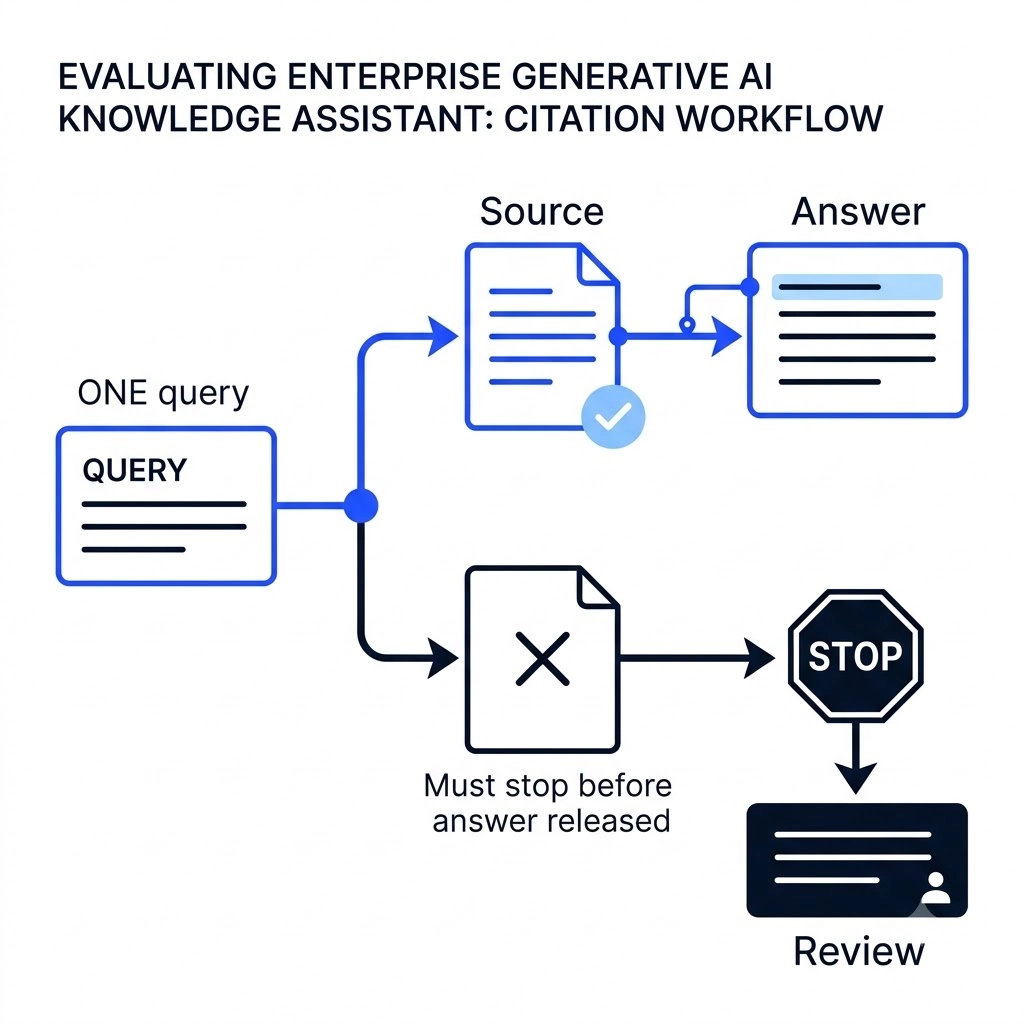
Engineers build an isolated sandbox prototype using representative business datasets to stress-test core system assumptions before committing production capital.
- Primary activities: Implementing functional prompt chains, configuring document chunking and semantic search retrieval, and measuring latency thresholds under test loads.
- Tangible deliverables: Functional sandbox prototype, proof-of-concept prototyping report, and user feedback synthesis.
Stage 4: Production deployment and LLMOps hardening
The engagement transitions from validation to operational engineering. The partner integrates the system into enterprise cloud environments and hands off operational controls to internal teams.
- Primary activities: Migrating validated code to production infrastructure, establishing continuous integration for model updates, configuring telemetry for latency and hallucinations, and upskilling in-house engineers.
- Tangible deliverables: Production application codebase, managed services monitoring suite, fallback routing architecture, and operational handover documentation.
Evaluating and selecting the right generative AI partner
Selecting the right consulting partner requires assessing architectural rigor, domain alignment, security practices, and past delivery track records. Technical leaders must look beyond marketing claims and verify that a prospective consultancy possesses hands-on engineering capabilities rather than superficial API wrappers.
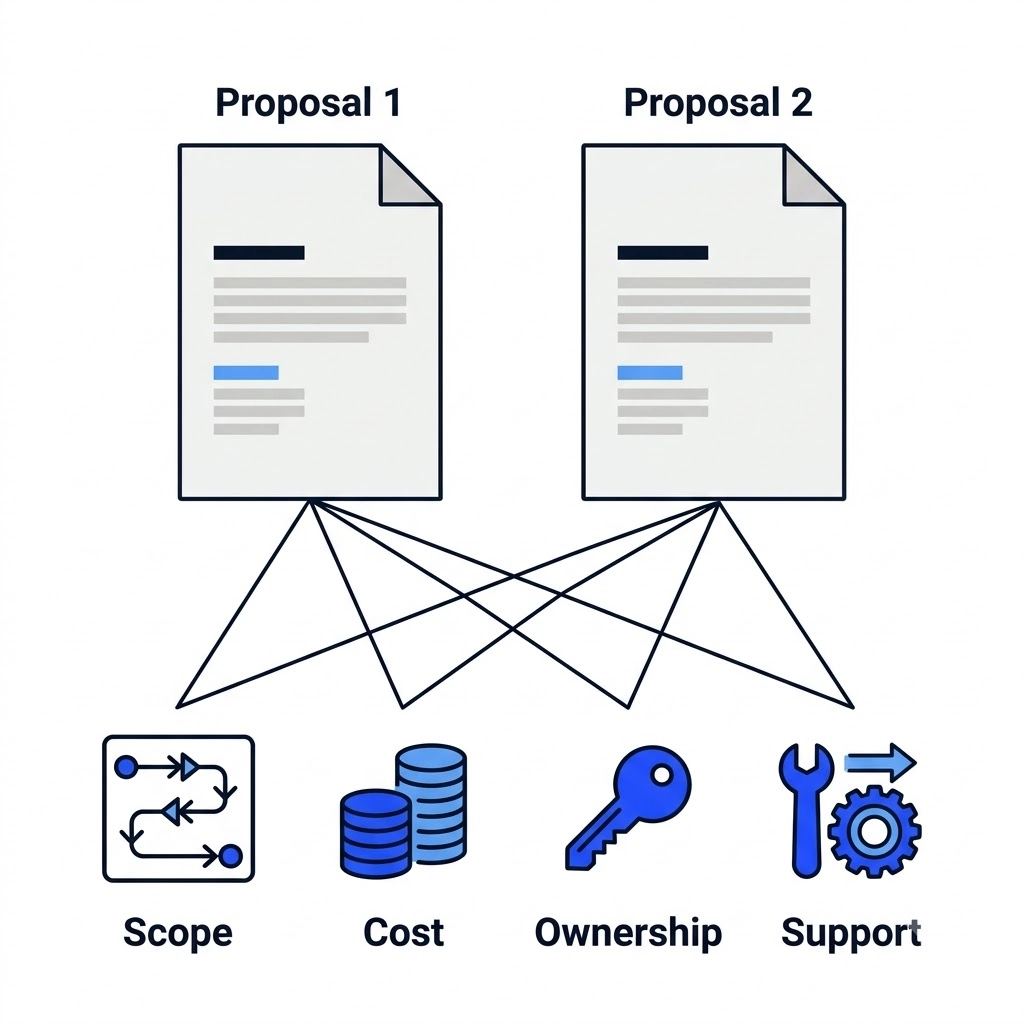
Four fundamental pillars should guide the vendor evaluation process:
- Engineering depth and model fluency: Verify code-level competence across LangChain, LlamaIndex, vLLM, and vector search technologies. The engineering team must demonstrate deep experience fine-tuning models like Llama or deploying state-of-the-art foundation models like GPT-4.
- Security and data governance: Confirm rigorous compliance frameworks, including private cloud deployments, zero data retention agreements, and alignment with regulatory standards such as GDPR and evolving data residency requirements.
- Intellectual property and commercial transparency: Require strict contractual guarantees ensuring that all custom weights and codebases remain your exclusive property. Insist on transparent estimates covering recurring API inference costs, as McKinsey research notes that roughly 20 percent of organizations cite ongoing operating expenses as a primary constraint limiting scaled adoption.
- Internal capability transfer: Require structured pairing sessions and operational runbooks so in-house engineers can manage, evaluate, and maintain the application after handoff.
Vendor differentiation: Boutiques versus global integrators
Choosing between a specialized boutique consultancy and a global systems integrator depends on brand trust, implementation partnerships, project urgency, and internal organizational scale.
| Dimension | Specialized Boutique Consultancies | Global Systems Integrators (GSIs) |
|---|---|---|
| Core technical focus | Custom RAG, model tuning, and rapid prototyping | Enterprise legacy modernization and broad IT transformation |
| Typical delivery velocity | High agility with accelerated proofs of concept | Longer governance cycles and structured rollout phases |
| Engagement cost profile | Specialized engineering rates with milestone flexibility | Enterprise scale contracts with multi-region retainers |
| Architecture flexibility | High adaptability with emerging open-source stacks | Standardized frameworks aligned with major cloud partners |
| Senior practitioner involvement | Direct access to senior machine learning architects | Layered account management with execution teams |
| Best suited for | Fast-moving product teams and custom AI applications | Regulated enterprise rollouts requiring legacy integration |
Boutique agencies prioritize rapid iterations, specialized model fine-tuning, and direct access to senior engineers. In contrast, global systems integrators provide the brand trust, established implementation partnerships, and change management frameworks needed for enterprise-wide transformations.
Transparent curation methodology and evaluation scope
This shortlist evaluates generative AI consultancies through verified engineering capabilities, documented governance standards, and commercial transparency rather than paid placements or subjective rankings. We assessed firms across North American, European, and Asia-Pacific markets to provide technical leaders with an objective baseline for procurement.
Market demand heavily influences consulting availability and regional specialization. According to a Fortune Business Insights analysis, North America accounted for 48.7% of the global generative AI market share. These conditions make hands-on delivery expertise essential for navigating complex enterprise implementations.
Our evaluation rests on three operational pillars:
- Selection criteria: We examined verified production track records, demonstrable LLMOps engineering capabilities, enterprise data privacy controls, and transparent commercial pricing models.
- Evidence base: Findings stem from public engineering whitepapers, audited client case studies, technical documentation, and cross-referenced enterprise software delivery registries.
- Scope limitations: This guide does not constitute an exhaustive audit of every global agency. Commercial billing rates, team availability, and preferred model stacks fluctuate based on project scope, data security tiers, and specific enterprise compliance mandates.
Shortlist of enterprise generative AI consulting providers
Choosing an enterprise partner requires matching vendor strengths with your specific architectural needs and delivery expectations. The following profiles evaluate nine enterprise-ready consultancies based on core service focus, verified delivery capabilities, and target engagement profiles.
1. Enosta
Enosta delivers AI-native product engineering, private cloud infrastructure setups, and custom retrieval-augmented generation pipelines for scalable web platforms.
- Service focus: Engineering end-to-end applications, secure vector search architectures, and embedded agent workflows.
- Verified capabilities: Hands-on product discovery, full-stack software delivery, private data hosting, and domain-adapted model fine-tuning.
- Potential engagement fit: Organizations evaluating generative AI applications and integration into existing workflows. Confirm project scope, deployment requirements, and delivery responsibilities directly with the team.
- Buyer verification questions: Ask for production retrieval latency benchmarks, local data isolation protocols, and full intellectual property assignment terms.
To explore Enosta’s implementation offering, review its generative AI solutions and compare the listed capabilities with your project’s requirements.
2. Accenture
Accenture handles large-scale global enterprise transformations, legacy core modernization, and organizational generative AI rollouts across distributed business units.
- Service focus: Cross-industry systems integration, strategic roadmapping, enterprise change management, and workforce reskilling.
- Verified capabilities: Strategic ecosystem partnerships across Microsoft Azure, AWS, and Google Cloud, supported by vast offshore engineering delivery centers.
- Ideal engagement fit: Multinationals and Fortune 500 corporations requiring extensive change management, legacy enterprise resource planning migration, and multinational deployment capacity.
- Buyer verification questions: Clarify the direct technical experience of your local project team versus offshore resources, and check minimum engagement spend thresholds.
3. Deloitte
Deloitte provides corporate governance advisory, regulatory compliance frameworks, and business process automation for complex organizations.
- Service focus: Artificial intelligence risk mitigation, ethical compliance frameworks, regulatory readiness audits, and financial workflow design.
- Verified capabilities: Specialized validation methodologies aligned with international frameworks like the European Union artificial intelligence regulations, combined with enterprise cloud compliance architectures.
- Ideal engagement fit: Highly regulated banking, insurance, and public sector organizations prioritizing legal defensibility, auditability, and risk controls over rapid application builds.
- Buyer verification questions: Request details on the exact ratio of strategic advisory consultants to hands-on software engineers on the team.
4. McKinsey & QuantumBlack
McKinsey & QuantumBlack guides board-level artificial intelligence strategy, enterprise operating model redesigns, and corporate analytics programs.
- Service focus: Corporate operating model transformation, organizational value realization, and proprietary predictive analytics architecture.
- Verified capabilities: Deep business domain analysis, board-level strategic roadmaps, and custom data science platforms built through the QuantumBlack engineering arm.
- Ideal engagement fit: Executive leadership teams seeking multi-million-dollar operational efficiencies or structural transformations across global operations.
- Buyer verification questions: Confirm the long-term custom software maintenance options once the initial strategic transformation deliverables are completed.
5. LeewayHertz
LeewayHertz specializes in custom deep-learning development, domain-specific foundation model fine-tuning, and autonomous agent engineering.
- Service focus: Specialized model training, multimodal system engineering, and proprietary enterprise knowledge base integrations.
- Verified capabilities: Production engineering using both proprietary application programming interfaces and open-source models, including custom fine-tuning on domain-specific datasets.
- Ideal engagement fit: Technology vendors and mid-to-large enterprises requiring deep machine learning engineering for niche technical use cases.
- Buyer verification questions: Ask for documented case metrics showing how their architectures suppress hallucinations and manage vector database retrieval latency under high query concurrency.
6. Appinventiv
Appinventiv delivers end-to-end digital product design, cloud-native generative AI integrations, and mobile application engineering.
- Service focus: Consumer-facing AI applications, mobile assistant integration, recommendation engines, and rapid digital product delivery.
- Verified capabilities: Large-scale product design teams experienced in embedding generative endpoints into native iOS, Android, and web platforms.
- Ideal engagement fit: Consumer brands and digital product companies wanting to quickly embed conversational interfaces or automated features into customer-facing software.
- Buyer verification questions: Request technical case studies demonstrating how they optimize client-side latency and manage backend inference costs on high-volume consumer endpoints.
7. DICEUS
DICEUS provides secure software engineering, enterprise data warehouse modernization, and custom generative AI integration for core enterprise platforms.
- Service focus: Core systems modernization, secure application programming interface pipeline integration, and transactional workflow automation.
- Verified capabilities: Compliance-driven engineering meeting international security standards and data privacy mandates, with proven integrations into enterprise databases and transactional backends.
- Ideal engagement fit: Banking, healthcare, and enterprise software firms that need to query secure transactional data through language models without cloud compliance risks.
- Buyer verification questions: Verify the exact data anonymization techniques used when passing internal database records into third-party foundation models.
8. Distyl AI
Distyl AI builds customized enterprise AI applications and bespoke operational intelligence tools integrated into core corporate workflows.
- Service focus: Enterprise workflow automation, foundation model adaptation, and operational intelligence tooling.
- Verified capabilities: Direct alliances with premier foundation model creators to build fine-tuned, secure reasoning systems deeply integrated with corporate knowledge graphs.
- Ideal engagement fit: Large enterprises looking to embed specialized language models directly into supply chain, proprietary research, or operational workflows.
- Buyer verification questions: Clarify recurring licensing fees, external model dependencies, and the proprietary code ownership terms of their platform modules.
9. Hexaware
Hexaware focuses on information technology operations automation, legacy enterprise modernization, and scalable conversational support transformation.
- Service focus: Information technology service management automation, employee service desk conversational tools, and enterprise cloud migrations.
- Verified capabilities: Proprietary delivery automation frameworks, automated code translation tools, and established information technology operations integration blueprints.
- Ideal engagement fit: Mid-to-large organizations seeking to reduce high administrative costs, automate customer service workflows, and modernize routine enterprise tasks.
- Buyer verification questions: Verify how legacy platform maintenance will be structured alongside newly introduced generative AI microservices.
Engagement pricing and operating cost breakdown
Enterprise generative AI consulting costs depend on project scope, deployment complexity, and post-launch infrastructure demands. Total expenditure combines professional advisory fees with recurring model operation costs and production support.
According to a Research and Markets report, the artificial intelligence consulting market will reach $8.96 billion in 2026, growing at a 21.2% annual rate. This rapid expansion reflects rising enterprise demand for specialized technical guidance that helps organizations secure valuable implementation partnerships and keep project costs predictable.
Standard engagement billing models
Consulting engagements typically follow three pricing models tailored to delivery certainty and technical ownership:
- Fixed-fee scoping and discovery: Two- to four-week architectural audits, data readiness evaluations, and roadmap planning phases cost between $15,000 and $40,000.
- Time and materials staff augmentation: Senior AI engineers average $150 to $350 per hour, while principal AI architects command $250 to $450 per hour for hands-on systems design.
- End-to-end turnkey implementation: Three- to six-month enterprise production projects range from $75,000 to $300,000, depending on pipeline complexity and custom model fine-tuning.
Ongoing operational costs and risk factors
Initial development accounts for only a portion of the total investment. Sustained production requires continuous operational budgeting and active mitigation of technical risks:
- Model inference APIs: Recurring expenses scale with monthly input and output token consumption, alongside plus recurring API inference costs for high-throughput enterprise workloads.
- Vector database infrastructure: Managed clusters such as Pinecone, Milvus, and Qdrant require dedicated memory allocations based on vector embedding volume.
- Operational failure modes: Teams must proactively budget for runaway token inference costs, brittle prompt-dependent architectures, hallucination risks in user-facing workflows, model drift over time, and pilot purgatory where prototypes stall before reaching production.
Measuring ROI and avoiding pilot failure
Proving value requires tying generative AI deployments directly to business metrics rather than treating adoption as an end goal. According to an Artic Sledge analysis, companies achieving successful AI deployment report $3.70 in value for every dollar invested, with top performers achieving returns of $10.30. Sustained operational impact depends on disciplined tracking and structured risk controls rather than broad experimentation.
Quantitative performance indicators
Engineering leaders should track both operational efficiency and technical accuracy to prevent pilot purgatory:
- Cycle time reduction: Measure end-to-end task duration, such as reducing tier-one customer ticket resolution or speeding up commercial contract analysis.
- Operational efficiency and labor savings: Target measurable reductions in labor hours across repetitive administrative and analytical workflows.
- Retrieval accuracy and precision: Monitor Context Relevance and Faithfulness scores in retrieval-augmented generation pipelines to track hallucination suppression over time.
- Developer and knowledge velocity: Track weekly output metrics, such as code generation velocity or internal search efficiency for technical documentation.
- User adoption tracking: Measure active daily engagement and workflow retention across business units to ensure tools replace legacy systems.
Operational risk mitigation
Moving beyond prototypes exposes systems to performance drift, brittle prompt-dependent architectures, and infrastructure budget overruns:
- Runaway token inference costs: Prevent budget overruns by implementing intelligent semantic caching, dynamic batching, and routing simple queries to lightweight models.
- Brittle prompt architectures: Replace fragile string concatenation with programmatic function calling, structured JSON output schemas, and robust orchestration frameworks.
- Hallucination risks: Restrict generation using tight context boundaries, forced document citations, and automated evaluation frameworks that reject ungrounded assertions.
- Model drift and API deprecation: Automated regression testing pipelines evaluate gold-standard prompt datasets against new model versions before promoting them to production.
How to choose the right partner for your roadmap
Choosing the right consulting partner requires aligning your immediate engineering constraints, governance demands, and delivery timelines with the right category of firm.
According to research published by the Federal Reserve, 54% of the U.S. labor force is employed by firms actively utilizing large language models. As foundational technology stabilizes, competitive advantage shifts from basic model access to execution speed and production reliability.
Organizations must carefully navigate internal skills shortages, soaring pilot failure rates, and recurring API inference costs without getting trapped in expensive hiring cycles. Partnering with proven enterprise generative ai consulting specialists helps bridge these capability gaps while accelerating time-to-market.
To select the most effective partner for your roadmap, evaluate your primary operational bottleneck against three distinct consulting profiles:
- Select a boutique product consultancy if: You need hands-on software engineering, high agility, custom RAG or fine-tuning, direct access to senior practitioners, and rapid production deployment within 8 to 16 weeks.
- Select a global systems integrator if: Your organization requires enterprise-wide change management across tens of thousands of staff, legacy ERP re-platforming, multi-region compliance, and global vendor procurement frameworks.
- Select an executive strategy firm if: Your primary objective is redefining corporate board-level positioning, assessing multi-million dollar acquisition targets, or designing organizational structures before writing code.
| Partner Type | Core Advantage | Ideal Company Stage | Primary Delivery Risk |
|---|---|---|---|
| Boutique Product Consultancy | Speed, specialized engineering, low overhead | Mid-market to scale-up | Limited capacity for massive enterprise change |
| Global Systems Integrator | Enterprise scale, broad compliance coverage | Fortune 500 incumbents | Slower delivery velocity, high overhead costs |
| Executive Strategy Firm | Board-level alignment, M&A due diligence | Enterprises planning major transformation | Lack of hands-on model deployment experience |
Frequently asked questions about generative AI consulting
What tangible outputs should we expect at the end of a consulting engagement?
A comprehensive engagement delivers functional engineering assets rather than passive slide decks. Clients receive production-grade code repositories, containerized microservices, documented API schemas, and vector database index configurations.
Engagements also produce proprietary artifacts tailored to daily workflows. These include custom fine-tuned model adapter weights, automated evaluation benchmark suites, context retrieval pipelines, and structured operational runbooks for internal engineering teams.
How do external consultancies protect proprietary data from leaking into public models?
Reputable consultancies isolate enterprise workflows through private cloud environments on AWS, Google Cloud, or Microsoft Azure. They enforce zero data retention agreements with foundation model providers to prevent commercial APIs from retaining client inputs for future training.
Production architectures also incorporate network isolation and automated anonymization proxies. Client-managed encryption keys, role-based access controls, and synthetic data scrubbing ensure sensitive intellectual property never enters LLM context windows unencrypted.
How long does it take to move from an initial AI assessment to a working production tool?
Most enterprise generative AI initiatives follow a phased delivery schedule spanning three to six months:
- Technical discovery and scoping: Takes 2 to 4 weeks to evaluate feasibility, audit data quality, and calculate the total cost of ownership.
- Proof of concept validation: Requires 4 to 6 weeks to build an isolated sandbox prototype and validate retrieval accuracy against real user queries.
- Production engineering and integration: Spans 8 to 16 weeks to implement guardrails, optimize inference latency, connect internal systems, and deploy monitoring pipelines.
According to research on enterprise AI adoption frameworks, 73% of enterprises report that advanced generative AI initiatives meet or exceed initial ROI expectations once deployed into daily workflows.
Who owns the intellectual property and fine-tuned model weights created during the project?
Standard enterprise contracts assign complete ownership of all bespoke deliverables directly to the client. This includes custom source code, retrieval pipeline orchestration logic, API integration middleware, and proprietary training datasets.
Clients also retain full ownership of domain-specific model adapter weights generated through fine-tuning. Upstream foundation models remain under their respective developer licenses, but your domain-specific configurations and internal embeddings stay exclusive company property. Verify that your master services agreement explicitly assigns these rights prior to project kickoff.
Choosing generative AI consulting services starts with defining the help your organization needs: strategy, architecture, implementation, or ongoing operations. This buyer’s guide helps technical and operational leaders compare engagement scopes, assess readiness, examine pricing assumptions, and evaluate potential providers. Use the criteria and questions below to build a shortlist and verify each provider’s capabilities against your requirements. The provider profiles are a starting point for due diligence, not a ranking or a guarantee of delivery outcomes.
What generative AI consulting services deliver
According to a Generative AI Consulting Guide, 95% of enterprise generative AI pilots deliver no measurable P&L impact, and only 5% of custom enterprise AI tools reach production. Engaging an external technical partner helps technical leaders overcome internal artificial intelligence skills shortages, avoid expensive hiring cycles, and accelerate time-to-market while addressing the high pilot failure rate.
The table below outlines the primary consulting work streams, their technical focus, and their tangible enterprise deliverables.
| Consulting Work Stream | Technical Focus | Tangible Enterprise Deliverables |
|---|---|---|
| Strategy & Roadmap | Use case prioritization, feasibility assessment, and total cost of ownership analysis | Enterprise AI roadmap, ROI matrix, and technology stack selection report |
| RAG & Knowledge Systems | Document parsing, vector embeddings, and retrieval-augmented generation pipelines | Secure internal search engines and enterprise knowledge assistants |
| Custom Development & Fine-Tuning | Foundation model selection, parameter tuning, and domain adaptation | Domain-specific LLM weights and specialized application codebases |
| Production Hardening & LLMOps | Latency optimization, model evaluation, and automated cost tracking | Monitoring dashboards, CI/CD pipelines, and guardrail frameworks |
These deliverables adapt directly to enterprise operational requirements. For security-conscious organizations, consultancies configure private cloud deployments and enforce strict data isolation boundaries with foundation model providers. This governance framework ensures data privacy and regulatory compliance. In modern digital operations, an enterprise ai transformation service restructures manual knowledge processes into automated, context-aware systems that scale reliably.
Client preparation and organizational readiness checklist
Hiring an external firm before auditing internal data assets and governance boundaries is a primary cause of project delays. Client teams must complete critical baseline preparation across their infrastructure, data hygiene, and organizational governance to ensure predictable project timelines.
According to research from Second Talent, enterprise generative AI spending reached $37 billion, tripling year-over-year allocations and driving intense demand for external architectural advisory. However, data engineering and governance scoping routinely account for 60 to 80 percent of the total project effort.
The checklist below outlines the core technical and operational prerequisites required before engaging an external development team.
| Prerequisite Area | Specific Requirement | Operational Impact |
|---|---|---|
| Clean Internal Data Assets | Audit document freshness, clean unstructured repositories, and map database schemas. | Prevents garbage-in results during custom retrieval pipelines. |
| API Accessibility | Verify REST or GraphQL endpoint availability and secure network gateways. | Enables seamless integration with model orchestration frameworks. |
| Compliance Mandates | Document regulatory frameworks like HIPAA, GDPR, or financial data rules. | Enforces strict zero data retention and private cloud deployments. |
| SME Availability | Allocate domain experts for ground-truth validation and relevance testing. | Accelerates feedback loops during evaluation phases. |
Technical readiness also requires aligning internal infrastructure with strict regulatory standards. In our experience, teams operating under regulated mandates must configure zero data retention agreements and establish private cloud deployments with major providers like AWS, Google Cloud, or Microsoft Azure before processing proprietary records.
Four-stage consulting engagement framework
A structured consulting engagement moves systematically from technical discovery to production operations through disciplined stage gates. This phased model prevents unstructured experimentation and aligns software architecture directly with business value.
According to an Impressico POC development guide, Gartner estimates that nearly 30 percent of generative AI projects will be abandoned after the proof-of-concept phase without structured governance. Following a formal delivery lifecycle helps enterprise teams validate assumptions early and avoid pilot failure.
The following sequential steps define standard consulting delivery across enterprise AI initiatives:
- 01Conduct technical discovery and feasibility assessments.
- 02Architect the system design and strategic roadmap.
- 03Validate capabilities via proof-of-concept prototypes.
- 04Deploy to production and harden LLMOps pipelines.
Stage 1: Technical discovery and feasibility assessment
Consultants audit existing software architecture, data pipelines, and security boundaries. The team evaluates nominated business workflows against technical viability and model capabilities.
- Primary activities: Conducting architectural audits, profiling structured and unstructured data sources, and quantifying technical feasibility across proposed use cases.
- Tangible deliverables: Prioritized opportunity backlog, architectural risk register, and an initial total cost of ownership model.
Stage 2: Architecture design and strategic roadmap
During this stage, architects define model requirements, data ingestion topologies, and integration points with existing internal systems.
- Primary activities: Selecting target foundation models, defining vector database schemas, establishing retrieval-augmented generation ingestion logic, and configuring security controls.
- Tangible deliverables: Multi-year deployment roadmap, vector retrieval system blueprint, and data compliance protocols.
Stage 3: Proof-of-concept and prototype validation
Engineers build an isolated sandbox prototype using representative business datasets to stress-test core system assumptions before committing production capital.
- Primary activities: Implementing functional prompt chains, configuring document chunking and semantic search retrieval, and measuring latency thresholds under test loads.
- Tangible deliverables: Functional sandbox prototype, proof-of-concept prototyping report, and user feedback synthesis.
Stage 4: Production deployment and LLMOps hardening
The engagement transitions from validation to operational engineering. The partner integrates the system into enterprise cloud environments and hands off operational controls to internal teams.
- Primary activities: Migrating validated code to production infrastructure, establishing continuous integration for model updates, configuring telemetry for latency and hallucinations, and upskilling in-house engineers.
- Tangible deliverables: Production application codebase, managed services monitoring suite, fallback routing architecture, and operational handover documentation.
Evaluating and selecting the right generative AI partner
Selecting the right consulting partner requires assessing architectural rigor, domain alignment, security practices, and past delivery track records. Technical leaders must look beyond marketing claims and verify that a prospective consultancy possesses hands-on engineering capabilities rather than superficial API wrappers.
Four fundamental pillars should guide the vendor evaluation process:
- Engineering depth and model fluency: Verify code-level competence across LangChain, LlamaIndex, vLLM, and vector search technologies. The engineering team must demonstrate deep experience fine-tuning models like Llama or deploying state-of-the-art foundation models like GPT-4.
- Security and data governance: Confirm rigorous compliance frameworks, including private cloud deployments, zero data retention agreements, and alignment with regulatory standards such as GDPR and evolving data residency requirements.
- Intellectual property and commercial transparency: Require strict contractual guarantees ensuring that all custom weights and codebases remain your exclusive property. Insist on transparent estimates covering recurring API inference costs, as McKinsey research notes that roughly 20 percent of organizations cite ongoing operating expenses as a primary constraint limiting scaled adoption.
- Internal capability transfer: Require structured pairing sessions and operational runbooks so in-house engineers can manage, evaluate, and maintain the application after handoff.
Vendor differentiation: Boutiques versus global integrators
Choosing between a specialized boutique consultancy and a global systems integrator depends on brand trust, implementation partnerships, project urgency, and internal organizational scale.
| Dimension | Specialized Boutique Consultancies | Global Systems Integrators (GSIs) |
|---|---|---|
| Core technical focus | Custom RAG, model tuning, and rapid prototyping | Enterprise legacy modernization and broad IT transformation |
| Typical delivery velocity | High agility with accelerated proofs of concept | Longer governance cycles and structured rollout phases |
| Engagement cost profile | Specialized engineering rates with milestone flexibility | Enterprise scale contracts with multi-region retainers |
| Architecture flexibility | High adaptability with emerging open-source stacks | Standardized frameworks aligned with major cloud partners |
| Senior practitioner involvement | Direct access to senior machine learning architects | Layered account management with execution teams |
| Best suited for | Fast-moving product teams and custom AI applications | Regulated enterprise rollouts requiring legacy integration |
Boutique agencies prioritize rapid iterations, specialized model fine-tuning, and direct access to senior engineers. In contrast, global systems integrators provide the brand trust, established implementation partnerships, and change management frameworks needed for enterprise-wide transformations.
Transparent curation methodology and evaluation scope
This shortlist evaluates generative AI consultancies through verified engineering capabilities, documented governance standards, and commercial transparency rather than paid placements or subjective rankings. We assessed firms across North American, European, and Asia-Pacific markets to provide technical leaders with an objective baseline for procurement.
Market demand heavily influences consulting availability and regional specialization. According to a Fortune Business Insights analysis, North America accounted for 48.7% of the global generative AI market share. These conditions make hands-on delivery expertise essential for navigating complex enterprise implementations.
Our evaluation rests on three operational pillars:
- Selection criteria: We examined verified production track records, demonstrable LLMOps engineering capabilities, enterprise data privacy controls, and transparent commercial pricing models.
- Evidence base: Findings stem from public engineering whitepapers, audited client case studies, technical documentation, and cross-referenced enterprise software delivery registries.
- Scope limitations: This guide does not constitute an exhaustive audit of every global agency. Commercial billing rates, team availability, and preferred model stacks fluctuate based on project scope, data security tiers, and specific enterprise compliance mandates.
Shortlist of enterprise generative AI consulting providers
Choosing an enterprise partner requires matching vendor strengths with your specific architectural needs and delivery expectations. The following profiles evaluate nine enterprise-ready consultancies based on core service focus, verified delivery capabilities, and target engagement profiles.
1. Enosta
Enosta delivers AI-native product engineering, private cloud infrastructure setups, and custom retrieval-augmented generation pipelines for scalable web platforms.
- Service focus: Engineering end-to-end applications, secure vector search architectures, and embedded agent workflows.
- Verified capabilities: Hands-on product discovery, full-stack software delivery, private data hosting, and domain-adapted model fine-tuning.
- Potential engagement fit: Organizations evaluating generative AI applications and integration into existing workflows. Confirm project scope, deployment requirements, and delivery responsibilities directly with the team.
- Buyer verification questions: Ask for production retrieval latency benchmarks, local data isolation protocols, and full intellectual property assignment terms.
To explore Enosta’s implementation offering, review its generative AI solutions and compare the listed capabilities with your project’s requirements.
2. Accenture
Accenture handles large-scale global enterprise transformations, legacy core modernization, and organizational generative AI rollouts across distributed business units.
- Service focus: Cross-industry systems integration, strategic roadmapping, enterprise change management, and workforce reskilling.
- Verified capabilities: Strategic ecosystem partnerships across Microsoft Azure, AWS, and Google Cloud, supported by vast offshore engineering delivery centers.
- Ideal engagement fit: Multinationals and Fortune 500 corporations requiring extensive change management, legacy enterprise resource planning migration, and multinational deployment capacity.
- Buyer verification questions: Clarify the direct technical experience of your local project team versus offshore resources, and check minimum engagement spend thresholds.
3. Deloitte
Deloitte provides corporate governance advisory, regulatory compliance frameworks, and business process automation for complex organizations.
- Service focus: Artificial intelligence risk mitigation, ethical compliance frameworks, regulatory readiness audits, and financial workflow design.
- Verified capabilities: Specialized validation methodologies aligned with international frameworks like the European Union artificial intelligence regulations, combined with enterprise cloud compliance architectures.
- Ideal engagement fit: Highly regulated banking, insurance, and public sector organizations prioritizing legal defensibility, auditability, and risk controls over rapid application builds.
- Buyer verification questions: Request details on the exact ratio of strategic advisory consultants to hands-on software engineers on the team.
4. McKinsey & QuantumBlack
McKinsey & QuantumBlack guides board-level artificial intelligence strategy, enterprise operating model redesigns, and corporate analytics programs.
- Service focus: Corporate operating model transformation, organizational value realization, and proprietary predictive analytics architecture.
- Verified capabilities: Deep business domain analysis, board-level strategic roadmaps, and custom data science platforms built through the QuantumBlack engineering arm.
- Ideal engagement fit: Executive leadership teams seeking multi-million-dollar operational efficiencies or structural transformations across global operations.
- Buyer verification questions: Confirm the long-term custom software maintenance options once the initial strategic transformation deliverables are completed.
5. LeewayHertz
LeewayHertz specializes in custom deep-learning development, domain-specific foundation model fine-tuning, and autonomous agent engineering.
- Service focus: Specialized model training, multimodal system engineering, and proprietary enterprise knowledge base integrations.
- Verified capabilities: Production engineering using both proprietary application programming interfaces and open-source models, including custom fine-tuning on domain-specific datasets.
- Ideal engagement fit: Technology vendors and mid-to-large enterprises requiring deep machine learning engineering for niche technical use cases.
- Buyer verification questions: Ask for documented case metrics showing how their architectures suppress hallucinations and manage vector database retrieval latency under high query concurrency.
6. Appinventiv
Appinventiv delivers end-to-end digital product design, cloud-native generative AI integrations, and mobile application engineering.
- Service focus: Consumer-facing AI applications, mobile assistant integration, recommendation engines, and rapid digital product delivery.
- Verified capabilities: Large-scale product design teams experienced in embedding generative endpoints into native iOS, Android, and web platforms.
- Ideal engagement fit: Consumer brands and digital product companies wanting to quickly embed conversational interfaces or automated features into customer-facing software.
- Buyer verification questions: Request technical case studies demonstrating how they optimize client-side latency and manage backend inference costs on high-volume consumer endpoints.
7. DICEUS
DICEUS provides secure software engineering, enterprise data warehouse modernization, and custom generative AI integration for core enterprise platforms.
- Service focus: Core systems modernization, secure application programming interface pipeline integration, and transactional workflow automation.
- Verified capabilities: Compliance-driven engineering meeting international security standards and data privacy mandates, with proven integrations into enterprise databases and transactional backends.
- Ideal engagement fit: Banking, healthcare, and enterprise software firms that need to query secure transactional data through language models without cloud compliance risks.
- Buyer verification questions: Verify the exact data anonymization techniques used when passing internal database records into third-party foundation models.
8. Distyl AI
Distyl AI builds customized enterprise AI applications and bespoke operational intelligence tools integrated into core corporate workflows.
- Service focus: Enterprise workflow automation, foundation model adaptation, and operational intelligence tooling.
- Verified capabilities: Direct alliances with premier foundation model creators to build fine-tuned, secure reasoning systems deeply integrated with corporate knowledge graphs.
- Ideal engagement fit: Large enterprises looking to embed specialized language models directly into supply chain, proprietary research, or operational workflows.
- Buyer verification questions: Clarify recurring licensing fees, external model dependencies, and the proprietary code ownership terms of their platform modules.
9. Hexaware
Hexaware focuses on information technology operations automation, legacy enterprise modernization, and scalable conversational support transformation.
- Service focus: Information technology service management automation, employee service desk conversational tools, and enterprise cloud migrations.
- Verified capabilities: Proprietary delivery automation frameworks, automated code translation tools, and established information technology operations integration blueprints.
- Ideal engagement fit: Mid-to-large organizations seeking to reduce high administrative costs, automate customer service workflows, and modernize routine enterprise tasks.
- Buyer verification questions: Verify how legacy platform maintenance will be structured alongside newly introduced generative AI microservices.
Engagement pricing and operating cost breakdown
Enterprise generative AI consulting costs depend on project scope, deployment complexity, and post-launch infrastructure demands. Total expenditure combines professional advisory fees with recurring model operation costs and production support.
According to a Research and Markets report, the artificial intelligence consulting market will reach $8.96 billion in 2026, growing at a 21.2% annual rate. This rapid expansion reflects rising enterprise demand for specialized technical guidance that helps organizations secure valuable implementation partnerships and keep project costs predictable.
Standard engagement billing models
Consulting engagements typically follow three pricing models tailored to delivery certainty and technical ownership:
- Fixed-fee scoping and discovery: Two- to four-week architectural audits, data readiness evaluations, and roadmap planning phases cost between $15,000 and $40,000.
- Time and materials staff augmentation: Senior AI engineers average $150 to $350 per hour, while principal AI architects command $250 to $450 per hour for hands-on systems design.
- End-to-end turnkey implementation: Three- to six-month enterprise production projects range from $75,000 to $300,000, depending on pipeline complexity and custom model fine-tuning.
Ongoing operational costs and risk factors
Initial development accounts for only a portion of the total investment. Sustained production requires continuous operational budgeting and active mitigation of technical risks:
- Model inference APIs: Recurring expenses scale with monthly input and output token consumption, alongside plus recurring API inference costs for high-throughput enterprise workloads.
- Vector database infrastructure: Managed clusters such as Pinecone, Milvus, and Qdrant require dedicated memory allocations based on vector embedding volume.
- Operational failure modes: Teams must proactively budget for runaway token inference costs, brittle prompt-dependent architectures, hallucination risks in user-facing workflows, model drift over time, and pilot purgatory where prototypes stall before reaching production.
Measuring ROI and avoiding pilot failure
Proving value requires tying generative AI deployments directly to business metrics rather than treating adoption as an end goal. According to an Artic Sledge analysis, companies achieving successful AI deployment report $3.70 in value for every dollar invested, with top performers achieving returns of $10.30. Sustained operational impact depends on disciplined tracking and structured risk controls rather than broad experimentation.
Quantitative performance indicators
Engineering leaders should track both operational efficiency and technical accuracy to prevent pilot purgatory:
- Cycle time reduction: Measure end-to-end task duration, such as reducing tier-one customer ticket resolution or speeding up commercial contract analysis.
- Operational efficiency and labor savings: Target measurable reductions in labor hours across repetitive administrative and analytical workflows.
- Retrieval accuracy and precision: Monitor Context Relevance and Faithfulness scores in retrieval-augmented generation pipelines to track hallucination suppression over time.
- Developer and knowledge velocity: Track weekly output metrics, such as code generation velocity or internal search efficiency for technical documentation.
- User adoption tracking: Measure active daily engagement and workflow retention across business units to ensure tools replace legacy systems.
Operational risk mitigation
Moving beyond prototypes exposes systems to performance drift, brittle prompt-dependent architectures, and infrastructure budget overruns:
- Runaway token inference costs: Prevent budget overruns by implementing intelligent semantic caching, dynamic batching, and routing simple queries to lightweight models.
- Brittle prompt architectures: Replace fragile string concatenation with programmatic function calling, structured JSON output schemas, and robust orchestration frameworks.
- Hallucination risks: Restrict generation using tight context boundaries, forced document citations, and automated evaluation frameworks that reject ungrounded assertions.
- Model drift and API deprecation: Automated regression testing pipelines evaluate gold-standard prompt datasets against new model versions before promoting them to production.
How to choose the right partner for your roadmap
Choosing the right consulting partner requires aligning your immediate engineering constraints, governance demands, and delivery timelines with the right category of firm.
According to research published by the Federal Reserve, 54% of the U.S. labor force is employed by firms actively utilizing large language models. As foundational technology stabilizes, competitive advantage shifts from basic model access to execution speed and production reliability.
Organizations must carefully navigate internal skills shortages, soaring pilot failure rates, and recurring API inference costs without getting trapped in expensive hiring cycles. Partnering with proven enterprise generative ai consulting specialists helps bridge these capability gaps while accelerating time-to-market.
To select the most effective partner for your roadmap, evaluate your primary operational bottleneck against three distinct consulting profiles:
- Select a boutique product consultancy if: You need hands-on software engineering, high agility, custom RAG or fine-tuning, direct access to senior practitioners, and rapid production deployment within 8 to 16 weeks.
- Select a global systems integrator if: Your organization requires enterprise-wide change management across tens of thousands of staff, legacy ERP re-platforming, multi-region compliance, and global vendor procurement frameworks.
- Select an executive strategy firm if: Your primary objective is redefining corporate board-level positioning, assessing multi-million dollar acquisition targets, or designing organizational structures before writing code.
| Partner Type | Core Advantage | Ideal Company Stage | Primary Delivery Risk |
|---|---|---|---|
| Boutique Product Consultancy | Speed, specialized engineering, low overhead | Mid-market to scale-up | Limited capacity for massive enterprise change |
| Global Systems Integrator | Enterprise scale, broad compliance coverage | Fortune 500 incumbents | Slower delivery velocity, high overhead costs |
| Executive Strategy Firm | Board-level alignment, M&A due diligence | Enterprises planning major transformation | Lack of hands-on model deployment experience |
Frequently asked questions about generative AI consulting
What tangible outputs should we expect at the end of a consulting engagement?
A comprehensive engagement delivers functional engineering assets rather than passive slide decks. Clients receive production-grade code repositories, containerized microservices, documented API schemas, and vector database index configurations.
Engagements also produce proprietary artifacts tailored to daily workflows. These include custom fine-tuned model adapter weights, automated evaluation benchmark suites, context retrieval pipelines, and structured operational runbooks for internal engineering teams.
How do external consultancies protect proprietary data from leaking into public models?
Reputable consultancies isolate enterprise workflows through private cloud environments on AWS, Google Cloud, or Microsoft Azure. They enforce zero data retention agreements with foundation model providers to prevent commercial APIs from retaining client inputs for future training.
Production architectures also incorporate network isolation and automated anonymization proxies. Client-managed encryption keys, role-based access controls, and synthetic data scrubbing ensure sensitive intellectual property never enters LLM context windows unencrypted.
How long does it take to move from an initial AI assessment to a working production tool?
Most enterprise generative AI initiatives follow a phased delivery schedule spanning three to six months:
- Technical discovery and scoping: Takes 2 to 4 weeks to evaluate feasibility, audit data quality, and calculate the total cost of ownership.
- Proof of concept validation: Requires 4 to 6 weeks to build an isolated sandbox prototype and validate retrieval accuracy against real user queries.
- Production engineering and integration: Spans 8 to 16 weeks to implement guardrails, optimize inference latency, connect internal systems, and deploy monitoring pipelines.
According to research on enterprise AI adoption frameworks, 73% of enterprises report that advanced generative AI initiatives meet or exceed initial ROI expectations once deployed into daily workflows.
Who owns the intellectual property and fine-tuned model weights created during the project?
Standard enterprise contracts assign complete ownership of all bespoke deliverables directly to the client. This includes custom source code, retrieval pipeline orchestration logic, API integration middleware, and proprietary training datasets.
Clients also retain full ownership of domain-specific model adapter weights generated through fine-tuning. Upstream foundation models remain under their respective developer licenses, but your domain-specific configurations and internal embeddings stay exclusive company property. Verify that your master services agreement explicitly assigns these rights prior to project kickoff.