
What Is AI Transformation? What Changes Beyond AI Tools
September 21, 2026 See more
Types of website options vary widely, from dynamic digital storefronts to engaging blogs that shape your online presence. Choosing the right digital foundation is essential for business growth, guiding founders, marketers, and creators toward the best platform fit. Explore our website development services to evaluate technical requirements, match core features, and select a scalable platform.
Websites serve many different goals on the internet. The main types include e-commerce stores, business and corporate pages, blogs, portfolios, educational platforms, and social media hubs. Each type uses a unique layout to match what the user wants to do. Websites can be broadly categorized by their building method or their primary purpose.
The fundamental difference lies in how content is delivered and updated. Static websites deliver fixed content to every user. They are typically built with HTML, CSS, and JavaScript. This simpler architecture leads to faster loading speeds and enhanced security. Static sites are ideal for portfolios, landing pages, and basic informational sites. The first website went live in (https://example.com/history-of-web) as a text-only page with hyperlinks.
Dynamic websites, conversely, generate content in real-time. This generation is based on user interactions, databases, or other variables. They require server-side languages like Python, PHP, or Node.js, along with databases. Dynamic sites offer personalized experiences, user accounts, and complex functionalities. They are essential for e-commerce, membership sites, and web applications.
These sites represent an organization’s official online presence, but with distinct focuses. Corporate websites serve as the official representation of a large organization. They provide comprehensive information about the company, its mission, vision, products, services, stakeholders, and contact details. Their aim is to establish a professional brand image and communicate with the public. Key features include investor relations sections, detailed about pages, and career pages. Examples include Unilever, Coca-Cola Company, and Apple. However, these sites can sometimes feel broad and less engaging for specific product interests. They may also overwhelm visitors with too much information if not structured well.
Brand websites are dedicated to promoting a specific brand, product line, or sub-brand. They offer a more targeted marketing approach. These sites focus on communicating a particular value proposition and fostering brand loyalty. Key features include product-specific landing pages, campaign highlights, and brand storytelling. Examples include Dove (a brand of Unilever), iPhone (a brand of Apple), and 7UP (a brand of Suntory PepsiCo). Building a separate brand site requires careful linking to the corporate site to avoid customer confusion. There are also potential additional costs in design, hosting, and maintenance.
These websites are designed for selling goods or services directly to consumers online. Their primary purpose is to facilitate online transactions, manage product catalogs, and process payments securely. Key features include product pages with descriptions, pricing, shopping cart functionality, and secure payment gateway integration. They also incorporate inventory management systems and order tracking. United States retail e-commerce sales reached approximately $1.23 trillion in 2025. Globally, the B2B e-commerce market reached $36.16 trillion in 2026. The United States houses 50% of all e-commerce websites worldwide. Examples include Amazon, Shopify stores, and Etsy. These platforms require robust security, reliable hosting, and effective search engine optimization. Choosing the right e-commerce platform pricing and understanding e-commerce website features are critical.
These platforms showcase individual work and professional capabilities. Portfolio websites are used to display creative work, projects, and skills to attract clients or employers. Designers, artists, writers, and photographers commonly use them. Key features include high-quality visuals, project case studies, and clear contact information. Examples include freelance designers’ websites and photographers’ online galleries. Emphasis is placed on visual appeal, user experience design, and clear navigation to showcase work effectively. Personal websites share personal thoughts, experiences, or professional branding. They can range from an online resume to a personal blog, often including an about section and links to social media profiles.
These sites focus on delivering information, knowledge, and learning experiences. Blog websites are used for publishing articles, news, and updates regularly. Their goal is to engage an audience and improve search engine visibility. Key features include chronological posts, categories, and comment sections. WordPress powers approximately 38 million websites globally, making it a dominant platform for content management. Educational websites provide structured learning materials and courses. They feature online lessons, quizzes, and student dashboards. News and media websites deliver timely news and multimedia content. They often include breaking news sections and search functionality.
These sites foster user interaction and organized information sharing. Community or forum websites create spaces for users to interact and discuss topics. They feature user profiles, discussion threads, and moderation tools. Examples include Reddit and Stack Overflow. Directory or listing websites organize information about businesses or services. They offer search filters, user reviews, and business profiles. Examples include Yelp and Yellow Pages. Social media hubs enable users to create profiles, share content, and connect with others. Microsites or campaign sites are temporary websites for specific marketing efforts. Platform sites, like web applications or SaaS, provide specialized services with complex interactive features. These often require custom web development services.

Beyond understanding a website’s purpose, grasping its underlying technology and essential features is crucial. This technical foundation directly impacts performance, user experience, and manageability.
Content management systems (CMS) are platforms designed to simplify website content creation, management, and modification. They empower users, even those without deep technical skills, to update text, images, and other media.
Popular examples include WordPress, which dominates the market for blogs and content-heavy sites, capturing a massive share of the publishing ecosystem. For more advanced architectures, headless CMS options offer greater flexibility by separating the content backend from the frontend presentation layer. When selecting a CMS, consider its ease of use, scalability to accommodate future growth, the availability and quality of plugins or extensions, and its overall security posture.
A well-designed user experience (UX) is paramount for any website’s success. It ensures visitors can effortlessly navigate the site, find the information they need, and complete desired actions, ultimately leading to higher engagement and conversion rates.
Key principles of good UX include intuitive navigation that guides users logically, clear and compelling calls-to-action that prompt desired behaviors, excellent readability of content, and robust accessibility for all users. Mobile responsiveness is also a critical component of UX. Tools like Figma are widely used for collaborative design and prototyping, allowing teams to visualize and refine the user journey before development begins.
With the majority of internet traffic now originating from mobile devices, a mobile-first approach and responsive design are non-negotiable. Your website must adapt seamlessly to all screen sizes, from desktops to tablets and smartphones.
Beyond responsiveness, website performance metrics like speed and loading times directly impact user satisfaction and search engine rankings. Key performance indicators, such as Google’s Core Web Vitals, are essential to monitor. Tools like Google Analytics provide valuable insights into user behavior and site performance, helping identify areas for improvement.
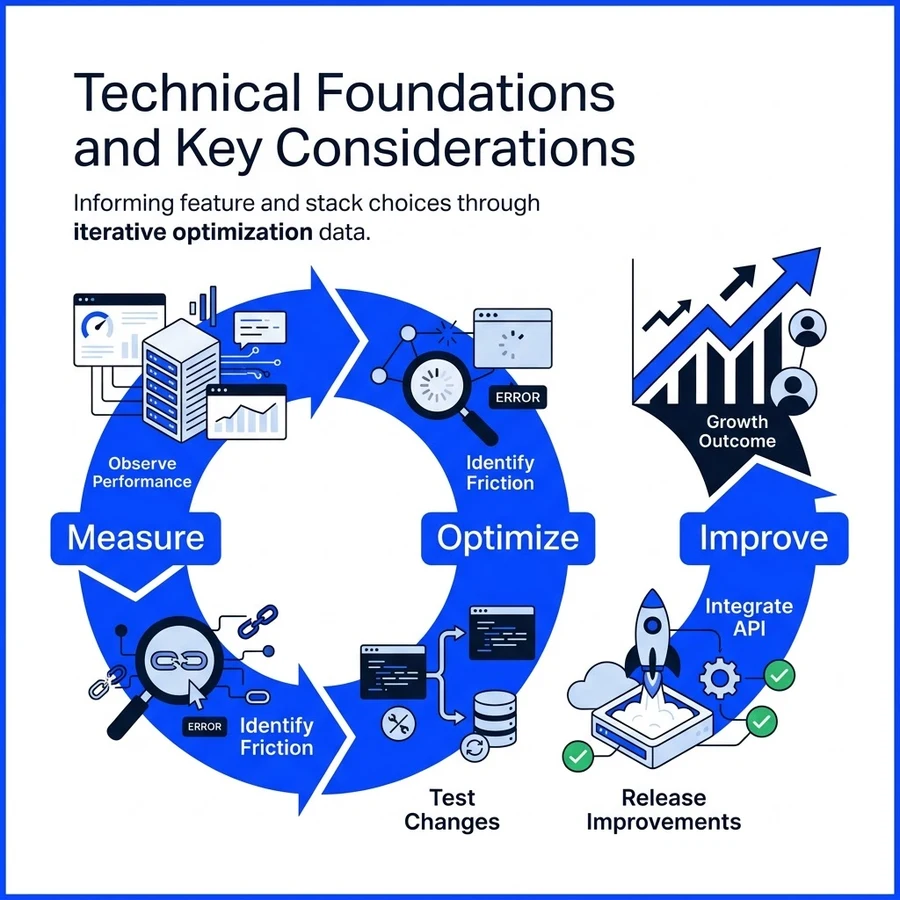
Robust security measures and adherence to data privacy regulations are essential for building user trust and protecting sensitive information. This is particularly critical for e-commerce sites and platforms handling personal data.
Essential security practices include implementing SSL certificates for secure HTTPS connections, conducting regular security audits, and employing secure coding practices. Compliance with data privacy regulations, such as GDPR, is also vital. These security features not only protect your users but also enhance your website’s credibility and reliability.
Choosing the right website type is crucial for online success. A structured decision process prevents costly missteps and ensures your digital presence aligns with business goals.
What is the main objective for your online presence? Your primary goal will dictate the most suitable website type. For instance, if direct sales are paramount, an e-commerce website is the clear choice. Businesses focused on generating leads might opt for a business website, landing pages, or microsites. Brand awareness and information dissemination are best served by corporate or brand websites, or a content-rich blog. Creative professionals looking to showcase their work will find portfolio websites ideal. Community building points towards forum or membership site solutions. Lastly, educational platforms cater to training and skill-sharing needs, while web applications and platform sites are designed for service provision.
Who are you trying to reach, and what are their needs and expectations? Understanding your audience is key to selecting a website type that resonates with them. Consumers typically engage with e-commerce sites, brand websites, and blogs. Businesses, especially in B2B contexts, often interact with corporate sites and specialized directories. Creative professionals and their potential clients are drawn to portfolio sites. Students and learners will seek out educational platforms. Community members thrive on forums and membership sites. Consider their technical proficiency and preferred interaction methods to ensure a seamless user experience.
What kind of content will you publish, and how often? Your content strategy directly influences the features and functionality required from your website. Regular articles, news updates, or evergreen content suggest a blog, news site, or content-driven platform. Product catalogs are essential for e-commerce sites. Visual work samples necessitate a portfolio website. Educational platforms require robust content management for course materials. Community and social media sites thrive on user-generated content. A well-defined content plan helps clarify the necessary features and content management system (CMS).
Consider the financial investment and technical expertise available. Development costs vary significantly. Custom web development services can range from thousands to hundreds of thousands of dollars, depending on complexity, design, and features. Ongoing expenses include hosting, domain registration, maintenance, security updates, and marketing efforts. Technical resources also play a vital role. For simpler needs, platforms like Wix or Squarespace might suffice. A CMS like WordPress offers more flexibility but requires some technical understanding. For complex requirements, hiring a web development agency is often necessary. A typical brand website might take 8-12 weeks to build, while an e-commerce platform with extensive integrations could require 12-20 weeks.
Match your defined goals and audience needs with specific functionalities. For e-commerce, essential features include a shopping cart, secure payment gateway integration, and inventory management. Membership sites require user login systems, subscription management, and gated content capabilities. Blogs benefit from commenting systems, categorization, and author profiles. Portfolio sites need image galleries, project case studies, and clear contact forms. This step clarifies the technical requirements for your chosen platform and ensures it can effectively support your objectives.
Let our experts guide you to the perfect online solution for your business.
Get a Free ConsultationStatic websites display fixed content to all users, making them fast and secure but less interactive. Dynamic websites generate content in real-time, offering personalized experiences and complex functionalities, but require more sophisticated development and maintenance.
If your primary goal is to sell products or services directly online, an e-commerce site is essential. If you aim to capture customer information for follow-up, build brand awareness, or provide detailed service information, a lead generation or business website is more appropriate.
Costs vary widely. They include domain registration ($10-$30 annually), hosting, design and development (ranging from template-based solutions to custom builds costing thousands), and ongoing maintenance, security, and marketing.
Yes, a blog can be a standalone website type, focusing on content publication and audience engagement. It can also be a feature within a larger website, such as a corporate or business site, to enhance SEO and provide valuable content.
Corporate websites represent the entire organization, offering broad information. Brand websites focus on a specific product or sub-brand, providing a more targeted marketing experience and deeper engagement for that particular offering.


Error: Contact form not found.
